Ghost Stations: The Forgotten Underground Worlds Sealed Beneath America's Busiest Cities
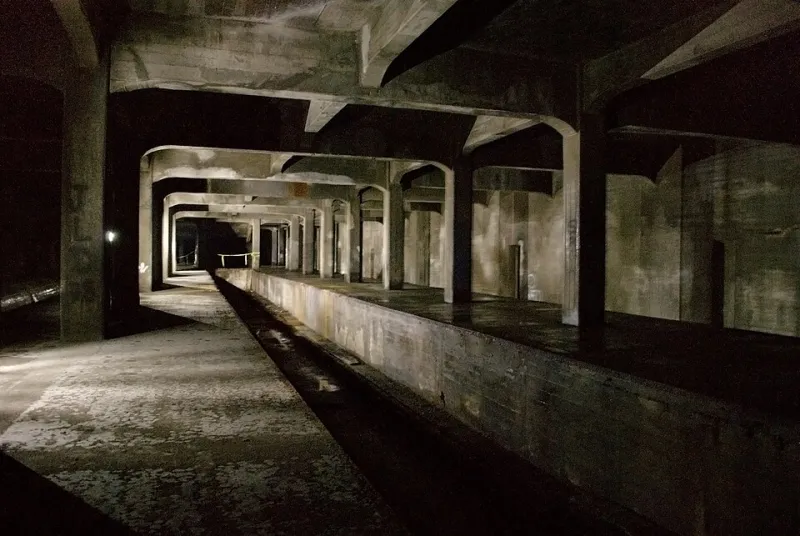
Photo: Jonathan Warren, CC BY-SA 3.0, via Wikimedia Commons
For a fraction of a second, if you're riding the right subway line and you know exactly where to look, you might catch it — a flash of old ceramic tile, a rusted platform edge, a darkened archway sliding past in the dark before the fluorescent lights of the active station flood back in. Blink and you've missed it. But it was real. And somewhere below the city you live in or visit, there are entire transit worlds that most people will never see.
America's underground ghost stations are the holy grail for a specific breed of urban explorer — the kind who studies transit maps like scripture and thinks nothing of spending hours in a drainage tunnel for the chance to document something that hasn't been photographed in decades. This guide is for those people. And for everyone else who's ever pressed their face against a subway window and wondered what was out there in the dark.
How Stations Get Abandoned in the First Place
The reasons a transit station gets sealed off are usually pretty mundane, even if the results are anything but. The most common culprit is simple geometry. Cities grow in unpredictable directions, and transit systems that made perfect sense in 1910 can become logistical liabilities by 1950. A station that once served a dense neighborhood might find itself stranded between two busier stops, too close to either one to justify the operational cost of keeping it open.
Platform length is another big factor. As subway cars got longer over the decades — partly for capacity, partly for efficiency — older stations with shorter platforms became incompatible with modern train configurations. Rather than undertake the expensive and disruptive work of extending a platform in a tight underground environment, transit authorities often just... closed the station. Sealed the entrances, redirected the ventilation, and moved on.
Sometimes, though, the story is more dramatic. Wartime infrastructure decisions, political disputes over neighborhood development, or sudden shifts in ridership patterns following a major employer relocating — all of these have contributed to stations going dark over the past century of American transit history.
New York City: The Cathedral in the Dark
No conversation about ghost stations begins anywhere other than New York. The city's subway system is the oldest and most complex in the country, and it has been shedding stations since the early 20th century. The most famous of these — and genuinely one of the most beautiful pieces of transit architecture on the entire continent — is the original City Hall station on the IRT Lexington Avenue line.
Opened in 1904 as the showcase centerpiece of New York's first subway, City Hall station was designed by the firm Heins & LaFarge with a level of architectural ambition that's almost shocking for a transit stop. Vaulted Guastavino tile ceilings, elegant skylights, brass chandeliers, and sweeping curved platforms that feel more like a European cathedral than a place to catch a train. It was closed to the public in 1945 — platforms too short for the newer, longer train cars — and has been technically off-limits ever since.
"Standing in City Hall station for the first time is genuinely overwhelming," recounts one longtime New York explorer who's documented the space extensively. "You're looking at something that millions of people built their city around, and it's just... sitting there. Perfect. Like it's waiting."
The New York Transit Museum actually offers periodic tours of the station, making it one of the rare ghost stations with a legitimate access pathway. If you can get a ticket, do it. It's worth every bit of effort.
Beyond City Hall, New York has dozens of other sealed or partially accessible transit remnants — abandoned mezzanines, sealed-off platforms still visible from active trains, and entire stretches of tunnel infrastructure that predate the current system. The Second Avenue Subway's long construction history left behind a number of sealed tunnel sections. The old BMT Myrtle Avenue station in Brooklyn exists in a kind of architectural purgatory, partially demolished but partially intact.
Boston: America's Oldest Subway and Its Hidden Remnants
Boston opened the first subway in the United States in 1897, which means it's had more time than any other American city to accumulate layers of abandoned transit infrastructure. The original Boylston Street station — the actual original, not the current one — still exists in a sealed-off section of tunnel beneath the current Green Line tracks. Portions of the old Pleasant Street loop, decommissioned in 1962, remain physically intact underground, occasionally glimpsed by passengers on the current E branch.
What makes Boston's underground archaeology particularly interesting is the way the city's geography forced the transit system to evolve in unusual ways. The tight, winding street grid of Beacon Hill and downtown meant that tunneling was often more creative — and more convoluted — than in grid-based cities. The result is a subsurface infrastructure that's full of unexpected chambers, forgotten passages, and architectural decisions that made sense at the time and became liabilities later.
The MBTA has historically been less open about its abandoned infrastructure than the MTA in New York, which makes documentation harder but also makes the existing photographic record more valuable.
Chicago: The Loop's Underground Secrets
Chicago's transit archaeology is split between two systems — the elevated L and the underground freight tunnel network known as the Chicago Tunnel Company system, which has nothing to do with passenger transit but is irresistible to anyone interested in urban underground spaces. Stretching roughly 60 miles beneath the Loop and surrounding neighborhoods, this narrow-gauge freight tunnel system was built in the early 1900s to move coal, ash, and merchandise under the city's streets. It was abandoned in 1959 and famously flooded in 1992 when a construction crew accidentally breached the tunnel wall near the Chicago River.
On the transit side, Chicago has its own collection of sealed station remnants, particularly along older sections of the L where station consolidations and line reconfigurations left platforms stranded. The Pullman neighborhood on the far South Side has several areas of decommissioned infrastructure worth researching, though access is complicated.
The Legal Reality of Going Underground
This part matters, so pay attention. Unauthorized access to transit infrastructure — subway tunnels, sealed stations, utility corridors — is a serious legal issue in every major American city. It's not just trespassing; in many jurisdictions it falls under transit tampering statutes that carry significantly heavier penalties. Transit systems also have their own police forces, and those officers are not known for being lenient with people they find in restricted areas.
Beyond the legal risks, the physical dangers are substantial and underappreciated. Active third rails carry 600 volts of direct current. Train schedules are not always predictable. Ventilation in sealed sections can be severely compromised. Structural conditions in tunnels that haven't been maintained in decades can be genuinely life-threatening.
The smartest approach — and the one that produces the best documentation anyway — is to pursue legitimate access wherever it exists. Transit museum tours, academic research partnerships, and media access requests have all opened doors for serious explorers. The Transit Museum in New York, the MBTA's historical archives in Boston, and the Chicago Transit Authority's public records are all genuinely useful starting points.
Documenting What's Down There
For those who do gain legitimate access to underground transit spaces, the documentation challenge is unique. Low light, high humidity, and the constant threat of sudden train movement (on sections adjacent to active lines) demand a specific technical approach. Wide-angle lenses, fast primes, and serious tripod discipline are non-negotiable. Audio documentation is also worth pursuing — the acoustic properties of sealed underground spaces are remarkable, and capturing ambient sound adds a dimension that photography alone can't replicate.
More than anything, the community of people documenting America's ghost stations is doing genuinely important historical preservation work. Transit authorities don't always maintain photographic records of decommissioned infrastructure. When a sealed station finally gets demolished to make way for a new project, the explorer community's documentation is often the only visual record that survives.
That's not a small thing. These spaces are part of the physical history of American cities — built by immigrant labor, shaped by political decisions, and ultimately abandoned by the same forces of growth and change that built them in the first place. They deserve to be remembered. And the people willing to go looking for them in the dark are, in their own way, making sure that happens.