Concrete Fortresses: Exploring the Cold War Government Buildings America Left Behind
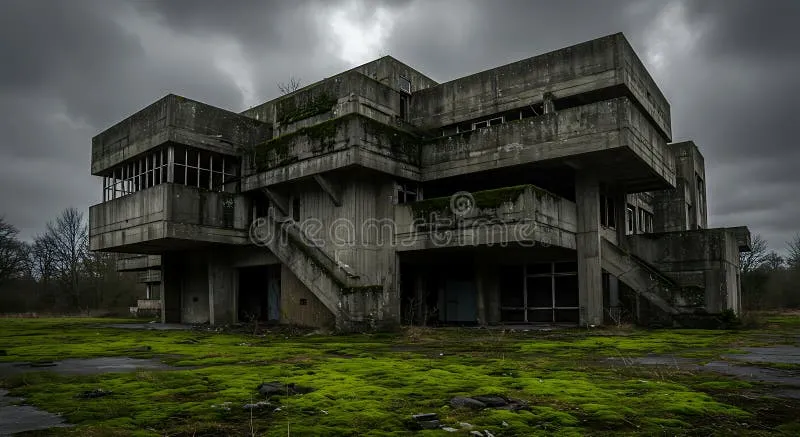
Photo: abandoned brutalist government building concrete Cold War architecture, via thumbs.dreamstime.com
There's something genuinely unsettling about standing in front of an abandoned federal building. Not the spooky, cobweb-and-creaking-floorboards kind of unsettling — more like the quiet unease of realizing that something enormous and powerful just... stopped. Packed up and walked away. Left the lights off.
Across the US, dozens of government-built structures from the Cold War period have reached exactly that fate. Agencies dissolved, military priorities shifted, and the massive concrete buildings that once hummed with bureaucratic urgency became expensive, inconvenient liabilities. Today, they're some of the most compelling — and most overlooked — urban exploration destinations in the country.
Why Brutalism Was the Government's Favorite Architectural Language
If you've ever looked at a mid-century federal building and thought it looked more like a bunker than an office, you weren't wrong. Brutalist architecture — characterized by raw, exposed concrete, repetitive geometric forms, and a general indifference to ornament — was practically tailor-made for the Cold War government mindset.
The style offered a few practical selling points. Reinforced concrete construction was genuinely more resistant to blast damage than traditional building methods. Thick walls provided natural insulation against surveillance. And on a symbolic level, the sheer physical weight of these structures communicated something that architects and federal planners apparently found appealing: permanence, authority, and the suggestion that the US government was not going anywhere.
The FBI, the Department of Defense, the Atomic Energy Commission — these weren't agencies that wanted their headquarters to look welcoming. They wanted them to look immovable.
Specific Sites Worth Knowing About
The Morgantown Federal Complex, West Virginia One of the more accessible examples for curious explorers, this partially decommissioned campus features the signature stacked-slab construction typical of late-1960s federal architecture. Originally built to house regional administrative functions for several overlapping agencies, the complex became redundant after a series of consolidations in the 1990s. Large sections remain vacant, and the exposed aggregate concrete facades have developed a remarkable patina of moss and water staining that photographers tend to find irresistible.
The Nike Missile Battery Sites, Various States During the 1950s and 60s, the Army constructed hundreds of Nike missile installations in rings around major American cities. Dozens of these sites — built with the same brutalist sensibility applied to a purely military purpose — have been abandoned for decades. The installations outside Chicago, Los Angeles, and New York are particularly well-documented in the explorer community. Many retain original equipment, including launch rails, control buildings, and underground magazines.
Loring Air Force Base, Maine Closed in 1994 as part of post-Cold War base realignments, Loring once housed B-52 bombers and sat just miles from the Canadian border. The remaining structures — including a massive flight operations building and a sprawling administrative complex — exhibit classic late-brutalist design. Local preservation advocates have fought to repurpose sections of the base, but large portions remain in limbo, slowly deteriorating in the harsh Maine winters.
The Paranoia Baked Into the Architecture
Spend enough time walking around these buildings and you start to notice design choices that don't make sense unless you understand the context they were built in. Windows are narrow and positioned high on walls — great for limiting exterior visibility into sensitive areas. Entrances are often indirect, requiring visitors to navigate through multiple controlled chokepoints before reaching interior spaces. Mechanical systems are frequently housed in interior rooms with no exterior exposure, a design choice driven by concerns about electromagnetic pulse attacks.
This wasn't paranoia in the clinical sense. It was a rational response to a genuine threat environment, translated directly into physical space. The buildings are, in a very literal way, three-dimensional documents of how American federal planners understood the world during those decades. Walking through them is closer to reading a primary source than visiting a museum.
Why These Places Stay Forgotten
For all their historical weight, Cold War government ruins rarely attract the mainstream attention that, say, an abandoned factory or a shuttered hospital might. Part of that is aesthetic — brutalist architecture is genuinely difficult for a lot of people to love. There's no romantic decay narrative attached to a crumbling concrete slab the way there is with a Victorian-era building going to seed.
There's also the access problem. Federal properties, even decommissioned ones, tend to remain under government ownership long after they've been abandoned, and federal trespassing charges carry consequences that most explorers reasonably want to avoid. This limits documentation, which limits public awareness, which limits preservation advocacy — a cycle that leaves a lot of significant sites in a slow, unwitnessed decline.
A handful of preservation groups have started pushing back. The Society of Architectural Historians has flagged several Cold War-era federal structures for documentation, and some state historic preservation offices have begun including mid-century government buildings in their surveys. It's slow work, but it's happening.
What Gets Lost When These Buildings Come Down
The demolition of the brutalist J. Edgar Hoover FBI Building in Washington, D.C. — currently underway as of this writing — has reignited debates about what gets preserved and what gets erased. Critics of the project argue that whatever its aesthetic shortcomings, the building is a direct artifact of a specific and consequential moment in American institutional history. Supporters of demolition counter that the building is functionally obsolete and architecturally unloved.
Both things can be true simultaneously. That tension — between historical significance and practical uselessness — is really the central challenge facing abandoned government brutalism across the country. These buildings were never meant to be charming. They were meant to endure. And in a weird way, the ones that have been abandoned are doing exactly that, outlasting the agencies that built them and the threats those agencies were built to counter.
For urban explorers, that's actually the draw. There's something worth paying attention to in a structure that was designed to project invincibility and now sits empty in a field somewhere in rural Maine or suburban Virginia. It's not beautiful, exactly. But it's honest.