Concrete Prairie Giants: The Machinery and Silence of America’s Retired Grain Elevators
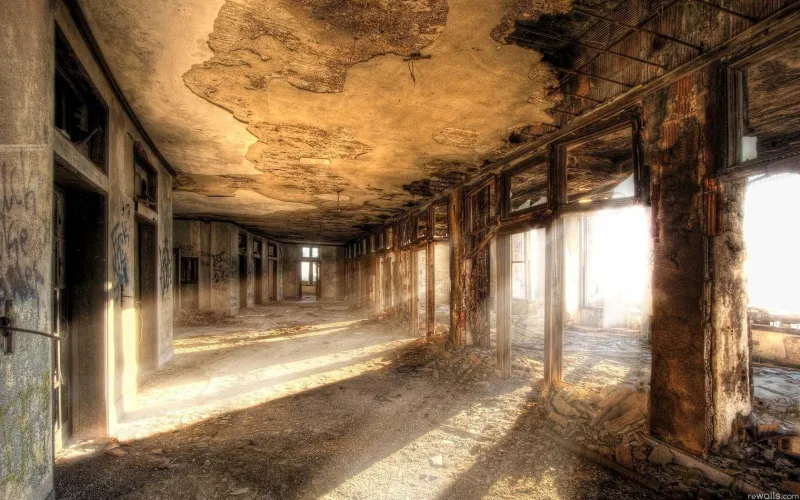
Photo: abandoned concrete grain elevator silos rural America, via wallpaperaccess.com
Why They Still Dominate the Skyline
Drive through a small town on the plains or along a rail line and you’ll see them before you see the town: tall concrete cylinders, steel bins, a headhouse with a few dark windows, maybe a faded co-op sign. Grain elevators were built to be seen. They are agricultural infrastructure with the scale of a cathedral, and when they go quiet, they leave a hole in the skyline that no water tower or cell antenna quite fills.
For much of the 20th century, these elevators were the first stop for corn, wheat, soybeans, and sorghum on the way to market. Farmers hauled grain in, trucks were weighed, samples were graded, and the grain was lifted into bins by a leg — a vertical conveyor of cups on a belt — then dropped into storage. The elevator was a bank, a scale, a warehouse, and a community landmark all at once.
Inside the House: Legs, Chutes, and Scales
The working heart of an elevator is the headhouse. That’s where the leg runs, where the drive motors sit, where distributors send grain down into different bins. The machinery is heavy and precise: belts, buckets, spouts, valves, and the scales that decided what a farmer’s load was worth. Offices at the base often still hold ledgers, sample pans, grading charts, and the kind of furniture that was built to survive a century.
The bins themselves are simple and terrifying. Concrete silos or steel tanks, connected by tunnels and catwalks, with openings that drop straight down. A grain elevator is essentially a vertical maze of fall hazards and confined spaces. Add decades of dust, rodents, and water intrusion, and you have a structure that can fail without warning.
The Economic Shift That Emptied Them
Grain elevators didn’t close because grain stopped moving. They closed because the system changed. Railroads consolidated routes. Larger terminal elevators and unit trains made small country elevators less efficient. Farmers built on-site storage. Co-ops merged. High-volume facilities with faster unloading and better logistics took the business. The old wooden elevators burned or were torn down; the concrete ones often survived because demolition is expensive and the land is not always worth redevelopment.
Some were converted to storage for other commodities. Some became feed mills or fertilizer depots. Many simply sat, with the leg stopped and the office phone disconnected. In 2026, these structures are a familiar sight on the rural landscape — and a familiar subject for photographers, historians, and explorers who are drawn to their scale.
The Safety Reality
It is important to be blunt: abandoned grain elevators are among the most dangerous places an urban explorer can enter. Grain dust is explosive. A single spark, a faulty motor, or a hot work tool can turn a bin into a bomb. Dust also causes respiratory damage. Confined spaces can be oxygen-deficient or filled with fumes. Grain engulfment can happen in seconds if a pile shifts or a bin is opened.
The structure itself is no kinder. Catwalks rust through. Ladders are missing rungs. Concrete spalls and drops chunks. Open chutes and manholes are hidden by debris. Floors are slick with dust and pigeon droppings. There may be no lighting, no railings, and no reliable way to call for help. Falling from a headhouse or being trapped in a bin are not hypothetical risks; they are the reason agricultural safety organizations treat these sites as restricted industrial spaces.
Legal Access and the Preservation Argument
Most grain elevators are private property. Some are still in use, even if they look abandoned. Others are owned by co-ops, agribusiness, or local investors. Trespassing can bring fines and charges, and it puts rescue workers at risk if something goes wrong. The responsible approach is to stay outside, shoot from public roads, and seek written permission when a documentary or preservation project requires closer access. Never enter a bin, a leg, or a tunnel. Never assume a floor is solid.
Preservation is complicated. A concrete elevator can be adaptively reused — as a climbing gym, storage facility, museum, or event space — but the cost of making one safe is enormous. Some communities have saved their elevators as landmarks; others have watched them come down. The buildings are not just relics of agriculture. They are monuments to a logistics system that fed the country, and to the small towns that grew around it.
As of 2026, the best way to experience a retired elevator may be from the road at sunset, when the concrete goes pink and the headhouse throws a long shadow across the bins. The silence is the point. But the silence is also a warning.