Shoes in the Cubby, Silence in the Pit: America’s Abandoned Bowling Centers
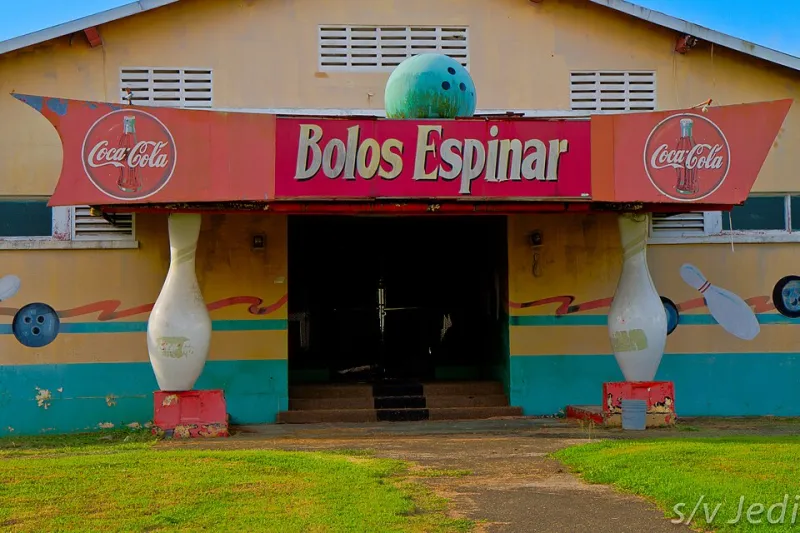
Photo: DeVerm, CC BY-SA 3.0, via Wikimedia Commons
The Sound That Isn’t There
Walk into a dead bowling center and the first thing you notice is what’s missing. Not the carpets, not the mural of a perfect strike, not the smell of old popcorn — the noise. A working alley is a machine made of sound: pins cracking off each other, ball returns clanking, fans pushing air through the ceiling, the wet thump of rental shoes on approach wood. When the power goes off for good, all of that collapses into a hush that feels almost unnatural. The building was designed to be loud. Without league night, it becomes a strange kind of chapel.
These places are scattered across the American suburbs, often in strip malls and standalone boxes that once anchored a Saturday. The reasons they closed are rarely dramatic. Leagues shrank. Families found other screens. Property values changed. A roof got expensive. An owner retired. The lanes sat dark, then the sign came down, then the parking lot got a new fence.
Pinspotters, Consoles, and the Machinery of Fun
The back of the house is where a bowling center stops being a social club and becomes a factory. Pinspotters — the machines that set pins, sweep decks, and return balls — are heavy, greasy, wonderfully overbuilt contraptions. Some are early electromechanical units with relays and cams; later ones are more electronic but still feel like they belong to a different era of American manufacturing.
Up front, the scoring consoles tell their own story. If you find a center that closed before the touchscreen era, you may see overhead projectors, slide carousels, or a bank of buttons that look more like a 1970s mainframe than a game interface. Later alleys have CRT monitors and beige keyboards, now just as retro as the wood lanes.
The shoe cubbies are the most human artifact. Rows of numbered slots, some still holding rental shoes, spray cans of disinfectant, or a handwritten sign about sock requirements. League trophies sit in cases near the snack bar — dusty bowling figures, engraved plates, team photos with matching shirts. There is a domesticity to it all: coffee makers, birthday-party napkins, a bulletin board with a lost-and-found notice. A place built for a crowd, preserved in the posture of an empty afternoon.
League Night Ghosts
Bowling alleys are social architecture. The lanes are the stage, but the real life happens in the margins: the bar, the arcade, the settee area, the counter where you trade shoes for a lane assignment. In abandoned centers, those margins are where the stories linger. A chalkboard still lists league standings. A sign-up sheet for a charity tournament is curling at the corners. The ashtrays are gone, but the burn marks remain.
The nostalgic pull is strong, and it’s easy to romanticize. But an empty alley is also a business that didn’t make it. The equipment was expensive to maintain, the building was expensive to heat, and the customer base was aging. The boom years of league bowling in the mid-20th century gave way to quieter decades. By the time many centers closed, the lanes had already been resurfaced, rebranded, and squeezed for every dollar.
Safety, Respect, and the Preservation Question
Bowling centers are not the most dangerous abandoned buildings, but they are not soft either. Water intrusion can rot the wooden approaches and lane beds. Ceiling tiles and light fixtures fall. The pin decks and pits are full of machinery with sharp edges, springs, and belts. Ball returns can be heavy and unstable. If the power is still on anywhere, treat it as live. If the roof has failed, stay out. And never, ever climb into a pinspotter pit or walk a dark lane bed alone.
Respect matters too. These places often sit on active commercial property, near homes, or inside strip malls with other tenants. Trespassing is trespassing. Many alleys are owned by families who still hold the lease or hope to sell. The right move is to seek permission, document from public vantage points, and leave everything exactly as found. The trophy case is not a souvenir shop.
Preservation is the hard question. A bowling center is not a cathedral or a train station; it rarely has the architectural cachet that brings in a preservation trust. But these buildings are part of the American leisure landscape, as surely as drive-ins and miniature golf courses. Some are being reused as churches, gyms, storage, and breweries. Others are being demolished for parking. The ones that survive will need a new reason to exist — not just nostalgia.
As of 2026, the best explorations of these lanes are quiet ones. You learn to read a building by its sounds, and when the sounds are gone, you read the dust. The pins are still standing in the racks. The shoes are still in the cubby. The score is frozen on the console. All that’s missing is the next frame.