Stage Lights Off: What Urban Explorers Find Inside America's Forgotten Concert Halls and Music Venues
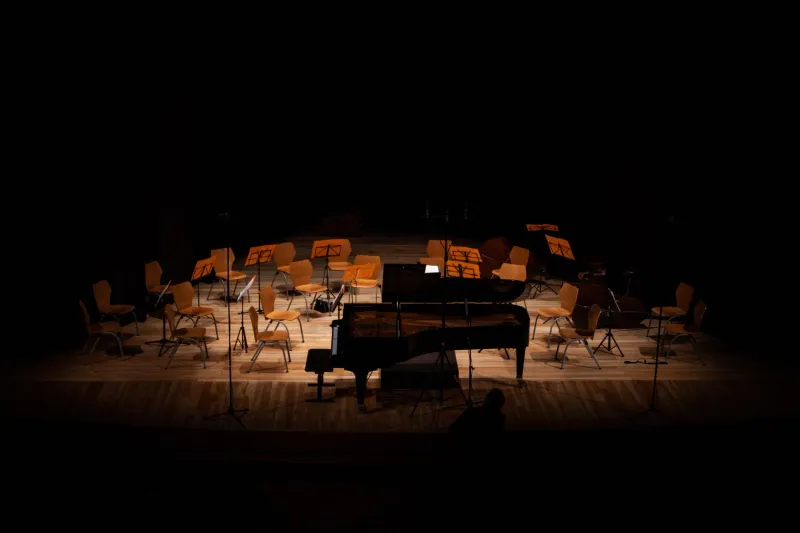
There's a specific kind of quiet that lives inside an abandoned concert venue. It's not the neutral silence of an empty office building or the dusty stillness of a shuttered factory. It's heavier than that — weighted by the ghost of crowd noise, reverb, and the particular energy that only ten thousand people screaming the same lyrics can generate. Walk into one of these places today and you feel the absence of all that sound like a pressure change in your ears.
Across the United States, hundreds of concert halls, amphitheaters, ballrooms-turned-rock-venues, and intimate listening rooms have been locked up, left behind, or simply forgotten. Urban explorers have been quietly documenting them for years, and what they're finding inside is equal parts heartbreaking and fascinating.
The Architecture of Sound, Going to Ruin
One of the first things explorers notice in these spaces is how purposefully they were built. Concert venues — especially the older ones — were engineered with serious acoustic intention. Curved plaster ceilings in early 20th-century music halls were designed to distribute sound evenly across a seated audience. Tiered balconies weren't just about sightlines; they were about bounce and projection. Even the materials mattered: heavy velvet curtains, plaster ornamentation, and wood-paneled walls all contributed to a room's sonic character.
When those venues are abandoned, that acoustic design doesn't disappear. Explorers report that even in states of significant decay, the rooms still respond to sound in unusual ways. Clap your hands on the stage of a crumbling 1920s vaudeville-era theater in a mid-sized Midwestern city and the echo comes back shaped — rounded by a ceiling that's been doing the same job for a hundred years, even with half its plaster on the floor.
What Gets Left Behind
The inventory of abandoned concert venues tends to follow a pattern, though every site has its own wrinkles.
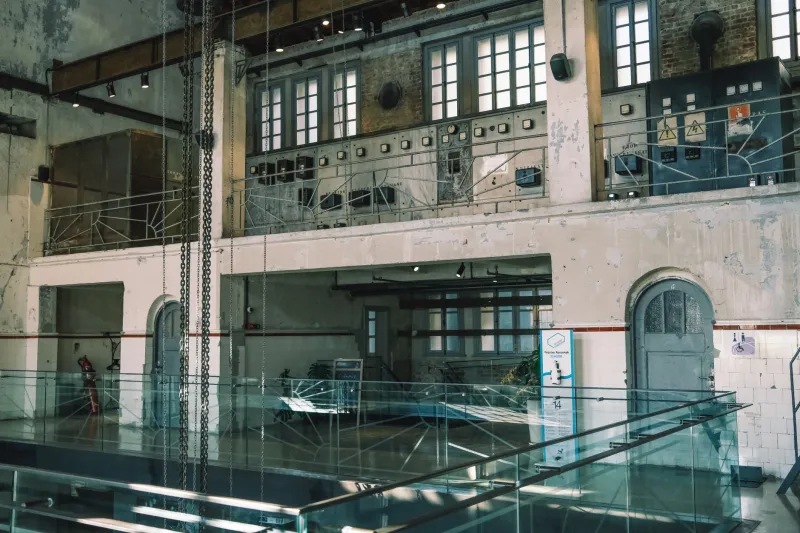
Stage equipment is almost always present in some form. Counterweight rigging systems hang frozen above darkened stages. Lighting grids rust in place, their PAR cans still angled toward where the spotlight used to land. In larger venues, massive speaker arrays remain bolted to structural elements — too expensive or complicated to remove, apparently, even when everything else was stripped out.
Backstage spaces are often the most evocative. Dressing rooms with mirrors still framed by dead bulbs, walls covered in band stickers and Sharpie signatures — some of them recognizable names, most of them local acts nobody remembers. Green rooms with busted-up couches and promotional posters for shows that happened decades ago. The occasional set list taped to a monitor wedge, handwritten in marker, the ink faded but the song titles still legible.
Concession infrastructure tells its own story. Popcorn machines. Vintage beer taps. Menu boards with prices that feel almost absurd by today's standards. In a few locations, explorers have documented full bars still stocked with dusty bottles — an oversight that's either remarkable or just speaks to how chaotic some venue closures were.
And then there are the concert posters. These are arguably the most historically significant finds in any music venue exploration. Promotional paper from the 1960s through the 1990s documenting touring acts, regional bands, and one-off events that never made it into any official archive. Some of these posters are in surprisingly good shape, protected by the same darkness that's been slowly destroying everything else around them.
Why They Closed
The reasons vary, but a few patterns keep showing up.
A lot of mid-century venues — particularly the ornate downtown theaters that got repurposed for rock shows in the 1970s and 80s — simply couldn't keep up with the economics of live music as it scaled up. The production demands of touring acts grew faster than the buildings could accommodate. Loading docks weren't big enough. Electrical systems couldn't handle modern stage rigs. Parking was always a problem. Newer, purpose-built amphitheaters and arenas on the outskirts of cities pulled the big tours away from downtown, and the smaller venues that depended on those shows as anchors couldn't survive on local bookings alone.
In other cases, the closures were more abrupt. Ownership changes, lease disputes, noise complaints from encroaching residential development, or just the slow financial attrition of a business that was always operating on thin margins. Some venues closed mid-booking cycle, leaving behind calendars with future shows still penciled in.
The rise of consolidation in the live events industry through the late 1990s and 2000s also played a role. As larger entertainment companies absorbed regional promoters and venue operators, independently owned rooms that didn't fit the portfolio got quietly shuttered.
Regional Highlights Worth Knowing
Without naming specific active exploration targets (because that's not really how this community works responsibly), there are geographic clusters worth being aware of.
The Rust Belt — Ohio, Pennsylvania, Michigan, upstate New York — has a dense concentration of abandoned music infrastructure, much of it tied to the industrial boom towns that once supported large working-class entertainment scenes. Ballrooms that hosted big band orchestras, later converted to rock venues, now sitting empty in downtowns that never fully recovered from deindustrialization.
The South has its own layer, particularly around cities that were stops on touring circuits during the 1950s and 60s. Some of these venues carry significant civil rights history — spaces that were either segregated, or specifically designated as Black entertainment venues during Jim Crow, and whose stories are underrepresented in mainstream music history.
The Midwest's small-city amphitheater boom of the 1980s left behind a string of outdoor venues that were built during a period of optimism about regional tourism and never quite delivered the return on investment their developers projected. These tend to be in various states of overgrowth, with concrete seating tiers disappearing under decades of vegetation.
The Preservation Question
This is where it gets complicated, and it's a conversation the urban exploration community has been having for a while.
Abandoned concert venues occupy a weird middle ground in historic preservation discussions. They're often not old enough to qualify for the kinds of protections that cover 19th-century opera houses, but they carry significant cultural weight that purely economic assessments tend to miss. A venue where a now-legendary band played their first major show, or where a regional music scene spent a decade developing, has historical value — it's just not always the kind of value that shows up on a developer's spreadsheet.
Some explorers have become informal archivists, photographing posters, documenting architectural details, and in some cases carefully removing paper ephemera from sites where it would otherwise be destroyed. It's a gray area ethically, and the community debates it constantly. What's clear is that without this kind of documentation, a lot of this history disappears entirely.
Going In
For anyone considering exploring these spaces: the standard rules apply and then some. Concert venues tend to have complex structural situations — catwalks and rigging that were designed to hold equipment loads are now compromised by years of moisture and neglect. Balconies in older buildings can be genuinely dangerous. The electrical systems in these places are often in particularly bad shape because of the heavy-duty infrastructure they were built around.
Go with someone who knows what they're doing. Document everything. Take nothing. And maybe, when you're standing alone on that stage in the dark, take a second before you start shooting photos.
The room has been waiting a long time for someone to notice it again.