Last Call: Wandering the Abandoned Nightclubs, Ballrooms, and Regional Casinos America Partied and Forgot
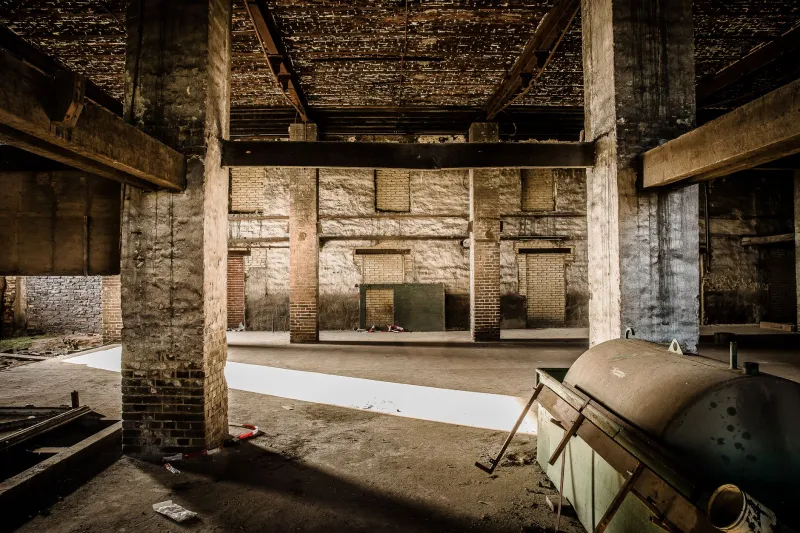
There's a particular kind of silence that settles inside places that used to be loud. It's not just the absence of noise — it's the weight of all the noise that came before. Step into an abandoned supper club from 1962 and you can almost feel the cigarette smoke that never fully left the curtains, the ghost of a house band running through a set nobody remembers, the clink of highball glasses that stopped ringing decades ago.
Across the United States, hundreds of entertainment venues have gone dark and stayed that way. Not the famous ones — not the Vegas landmarks that get demolished on live television and replaced with something shinier. The forgotten ones. The regional casinos that couldn't survive the competition. The downtown nightclubs that outlasted their neighborhoods by twenty years before finally giving up. The ballrooms where whole generations learned to dance, now collecting dust and pigeon droppings behind padlocked fire doors.
For urban explorers, these places are some of the most emotionally loaded finds in the country.
The Architecture of a Good Time
Entertainment venues were built to seduce. Architects and interior designers working on mid-century nightclubs, supper clubs, and ballrooms were given one job: make people feel like they'd arrived somewhere special the moment they walked through the door. That intention survives long after the business dies.
Explorers who document these spaces consistently describe the same first impression — the sense that the design still works, even in ruins. A vaulted ballroom ceiling with crumbling plaster rosettes still commands attention. A curved bar wrapped in rotting vinyl still anchors a room. Tiered seating arrangements built to maximize sightlines to a stage still create a sense of occasion, even when the stage itself has partially collapsed.
Mid-century entertainment design leaned hard on materials that age in interesting ways: terrazzo floors that survive almost everything, mirrored walls that fracture light even when half the panels are missing, textured wallcoverings that peel in long theatrical strips. What was meant to feel glamorous often reads, in decay, as genuinely dramatic — the kind of setting a production designer would spend a serious budget trying to recreate.
Regional Casinos: The Ones Vegas Beat
The gambling landscape outside Nevada and New Jersey has always been complicated. For decades, regional gaming operations — riverboat casinos, Native American gaming facilities that didn't scale, small resort-adjacent gambling halls — occupied a middle ground that proved difficult to sustain once the big operators started expanding aggressively.
The abandoned regional casino is a specific kind of urban exploration experience. Unlike a shuttered nightclub, these spaces were often purpose-built with casino operations in mind: low ceilings designed to keep attention on the floor, elaborate HVAC systems meant to manage smoke and crowds, security infrastructure embedded in the walls and ceilings. When they close, they close completely — slot machines hauled out, tables stripped, carpets left to mildew.
What remains tends to be the bones: the surveillance catwalks above dropped ceilings, the cashier cages with their reinforced glass still intact, the signage that nobody bothered to remove. Explorers have documented everything from abandoned counting rooms with their heavy vault doors hanging open to employee break rooms where someone's last shift schedule is still pinned to a corkboard.
The carpets in old casinos deserve their own mention. Casino carpet was famously, deliberately ugly — high-contrast, disorienting patterns designed to keep gamblers' eyes up and moving toward the action. In abandonment, that same carpet becomes something almost surreal: vivid geometric explosions slowly being consumed by water damage and mold, color still popping in places where the roof has held.
Nightclubs and the Neighborhoods They Left
The relationship between a neighborhood and its anchor entertainment venue runs deep. In dozens of American cities, a single club or ballroom served as the cultural center of a community for generations — places where local musicians got their breaks, where people celebrated and grieved, where entire subcultures incubated before going mainstream.
When those places close, they tend to close hard. A ballroom that drew thousands every weekend in the 1940s might spend the next sixty years as a storage facility, a church, a parking structure, before finally sitting empty. By the time explorers get inside, the layers of those different lives are visible in the walls — original decorative plasterwork above a dropped ceiling installed by a congregation, a loading dock cut into what used to be a stage wall, painted murals half-covered by industrial shelving.
Some of the most historically significant finds have happened this way. Explorers documenting what they thought was a generic abandoned commercial building have pulled back drop ceilings to find intact Art Deco detailing, original light fixtures, and architectural elements that local historians had assumed were gone. The documentation that results — photos, video walkthroughs, floor plan sketches — sometimes becomes the basis for preservation efforts or at least a record of what existed.
What the Bar Left Behind
If there's one consistent feature that explorers fixate on inside abandoned entertainment venues, it's the bar. Bars are built to last — heavy wood or laminate construction, deep shelving, durable fixtures — and they often survive in remarkable condition relative to the rest of a space.
Finding a bar frozen in time is a genuinely strange experience. Bottles left on shelves. Speed rails still mounted. Glassware sitting in drying racks. Point-of-sale systems from three technology generations ago. The occasional handwritten inventory list or shift change note tucked under a register. These details accumulate into something that feels less like a ruin and more like a crime scene — a place where ordinary life just stopped.
The back-of-house areas are equally compelling: walk-in coolers with their heavy doors, prep kitchens with commercial equipment still bolted to the walls, storage rooms stacked with promotional materials for events that never happened because the venue closed before the date arrived.
Documenting Before It Disappears
Entertainment venues face a particular preservation challenge. They were often built on valuable urban real estate, which means when they finally attract developer attention, they attract it fast. The window between a venue going dark and a venue getting demolished or gutted for adaptive reuse can be surprisingly short — sometimes a matter of months.
Urban explorers who document these spaces are doing something genuinely useful, even if it doesn't always feel that way from the outside. A thorough photographic record of an abandoned ballroom captures details that no historical archive holds. Architectural surveys conducted by explorers have provided the only existing documentation of interior configurations in buildings that were subsequently demolished.
The ethical framework matters here: document, don't disturb. Leave the vintage soda gun behind the bar where you found it. Don't pocket the cocktail napkins with the venue's logo. The value is in the record, not the souvenir.
America's forgotten pleasure palaces are out there — behind chain-link fences in downtown districts, at the end of rural casino access roads, tucked into neighborhoods that the entertainment industry moved on from a long time ago. The party ended. The lights went out. But the rooms are still there, holding their shape, waiting for someone curious enough to document what the good times left behind.