Underground America: The Buried Communities That Time and Geology Left Behind
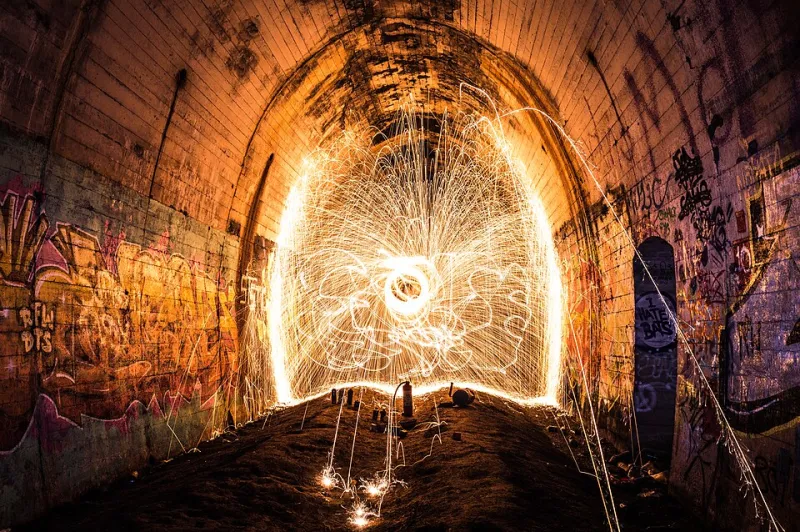
Photo: darkday., CC BY 2.0, via Wikimedia Commons
Most people think of underground spaces as utilitarian — pipes, subways, utility corridors. But scattered across the United States are places where people actually lived below the surface, built whole communities in the dark, and then walked away. Whether swallowed by subsidence, abandoned after mine closures, or simply outlived by the cities that grew over them, these subterranean neighborhoods represent one of urban exploration's most compelling — and most dangerous — frontiers.
This isn't about storm drains or forgotten subway tunnels. This is about homes. Streets. Storefronts. Whole layers of American life that sank, were buried, or were deliberately roofed over and erased from the map.
How Towns End Up Underground
The short answer: coal, geography, and time.
In the anthracite belt stretching through Pennsylvania, West Virginia, and Kentucky, underground mining operations were so extensive that entire surface communities were built directly above active mine workings. When those mines played out — or when the supporting pillars were robbed for extra coal — the ground simply gave way. Centralia, Pennsylvania is the most famous example, its streets cracked and steaming from a mine fire that's been burning since 1962, but it's far from the only one. Dozens of smaller communities across the region experienced partial or total subsidence, leaving behind tilted foundations, swallowed basements, and in some cases, intact rooms accessible only through collapse points.
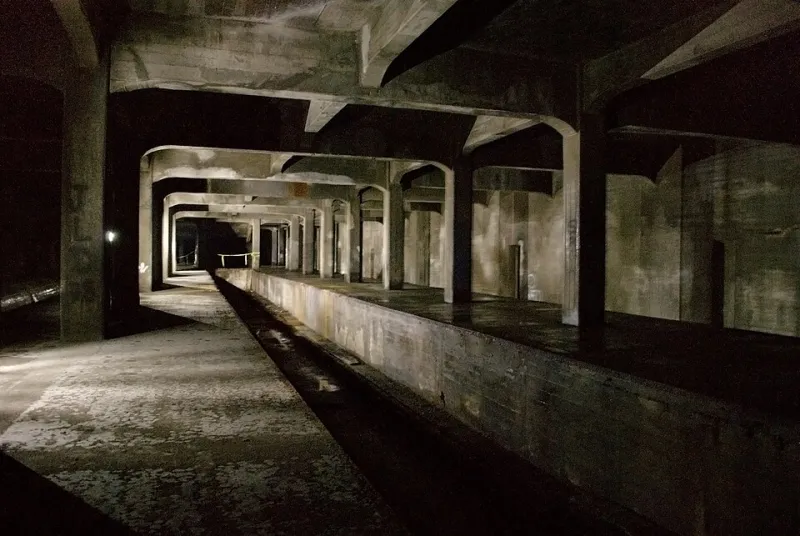
Then there's the phenomenon of urban stratification — cities that were rebuilt on top of themselves. Seattle's underground district is the most visitor-friendly version of this, where the original 1889 street level was simply buried under fill after the Great Seattle Fire, leaving an entire layer of storefronts and sidewalks intact beneath the modern city. But Seattle isn't alone. Parts of Chicago, Portland, and Cincinnati have similar buried street-level layers, most of them sealed off and largely undocumented.
Out west, the geology tells a different story. In areas of Nevada and Arizona, communities built near or into cliff faces — sometimes borrowing techniques from Indigenous peoples who'd inhabited the same terrain for centuries — were abandoned when mining booms went bust. These aren't quite underground, but they're not above ground either. Carved into hillsides, they exist in a strange in-between space that explorers have only recently started systematically documenting.
What Explorers Are Actually Finding
The documentation coming out of these sites over the last decade has been remarkable. Independent explorers — often working in small teams with serious technical gear — have been mapping spaces that haven't seen human presence in generations.
In western Pennsylvania, one frequently documented site (explorers are deliberately vague about exact locations to protect both the sites and themselves) features a partially collapsed neighborhood of roughly twelve structures, all tilted at severe angles from decades of slow subsidence. Explorers report intact wallpaper, cast iron stoves still in kitchen alcoves, and in at least two structures, hand-painted room numbers suggesting the buildings may have served as company housing for mine workers. The floors are treacherous — soft spots can open into the mine workings below with little warning — but the visual documentation coming out of these visits is extraordinary.
In the Pacific Northwest, a small group of explorers has spent the better part of three years mapping Seattle's less-publicized underground corridors, the ones that don't appear on the official tour routes. Their findings suggest the buried street network is significantly more extensive than the tourist-facing portion implies, with sealed-off sections containing retail fixtures, signage, and in one reported case, an intact early 20th-century pharmacy counter still stocked with empty bottles.
Appalachian subsidence sites present a different visual language entirely. These aren't preserved spaces so much as slowly digested ones — nature reclaiming structures from below while the surface world continues overhead. Explorers describe the sensation of descending through a collapse point into a space where tree roots hang from what used to be a ceiling, where creek water pools on what used to be a living room floor, where the geometry of a human-built space is being systematically undone by the earth around it.
The Engineering Nightmare of Getting In (and Out)
Let's be direct: these sites are genuinely dangerous in ways that most urban exploration locations simply aren't.
Abandoned factories might have unstable floors. Old hospitals might have asbestos. But subterranean residential sites combine all of those hazards with the additional complication of structural uncertainty that extends in three dimensions. A floor that holds your weight for thirty seconds might not hold it for thirty-one. A wall that looks intact might be the only thing preventing a ceiling collapse. Mine workings beneath subsidence sites can extend hundreds of feet down.
Serious explorers approaching these sites typically carry:
- Multiple redundant light sources (losing your light underground is a medical emergency)
- A means of marking their path back out (paracord or chalk)
- Gas detection equipment, especially in former mining areas where methane and carbon monoxide accumulate
- Communication devices and a surface contact who knows their timeline
- Proper footwear rated for unstable terrain
Beyond the physical gear, experienced underground explorers develop a particular kind of spatial awareness — reading the way a space sounds, feeling for flex in flooring before committing weight, paying attention to the way dust falls or air moves. This isn't something you develop on your first visit. It's built up over years of progressively more technical exploration.
Legal access is also a persistent complication. Most of these sites sit on private land, former company property, or in some cases, active superfund zones where trespassing carries serious consequences beyond a simple fine.
Why This Matters Beyond the Adventure
There's a legitimate historical preservation argument for documenting these spaces. In many cases, urban explorers are the only people creating records of what's down there. Academic institutions and municipal governments rarely have the budget or the inclination to investigate collapsed residential areas, and private landowners often have every incentive to keep these sites quiet.
The photographic and video documentation coming out of these underground communities represents a genuine historical archive — evidence of how working-class Americans lived, what their homes contained, and what happened when the economic engine that built those homes simply stopped running.
That's ultimately what makes this category of exploration feel different from other abandoned spaces. You're not walking through an empty factory or a decommissioned government building. You're walking through someone's kitchen. Someone's front porch. A place where people made breakfast and argued about money and put their kids to bed. The underground just happens to be where those places ended up.
If you're serious about exploring these sites, connect with established communities before you go anywhere. The knowledge-sharing culture in serious underground exploration is strong, and experienced explorers are generally willing to share safety information with people who demonstrate genuine respect for both the spaces and the risks involved.