Chips, Vaults, and Secret Passages: The Underground Architecture America's Gambling Empires Left Behind
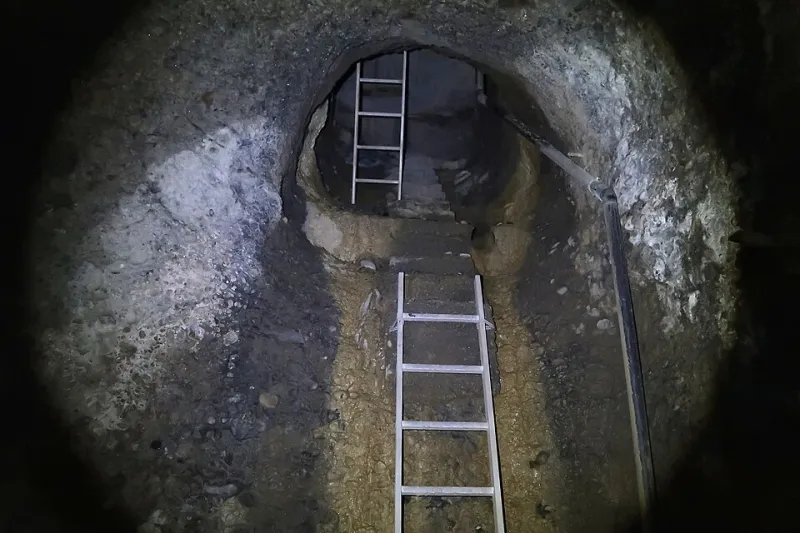
Photo: Kecko, CC BY 2.0, via Wikimedia Commons
Most people think of Las Vegas as a city built on spectacle — the kind of place where everything is intentionally visible, loud, and designed to keep your eyes moving and your wallet open. But spend enough time talking to urban explorers who've slipped beneath the Strip, and you start to understand that the real Vegas — the mechanical heart of it — was always underground.
The same goes for Atlantic City, Chicago's old gambling districts, and even smaller casino corridors in Reno and Kansas City. Beneath the carpet and the chips, these cities engineered elaborate underground systems to keep cash moving, staff invisible, and security airtight. Decades later, some of those systems are sealed, forgotten, and increasingly accessible to people willing to look for the door.
Why Casinos Went Underground
The logic wasn't complicated. A casino floor in its prime was a controlled environment — no clocks, no windows, carefully managed sightlines. But running a casino meant moving enormous sums of cash constantly, and doing that on the floor itself was both a security nightmare and a logistical mess. The solution was to go below.
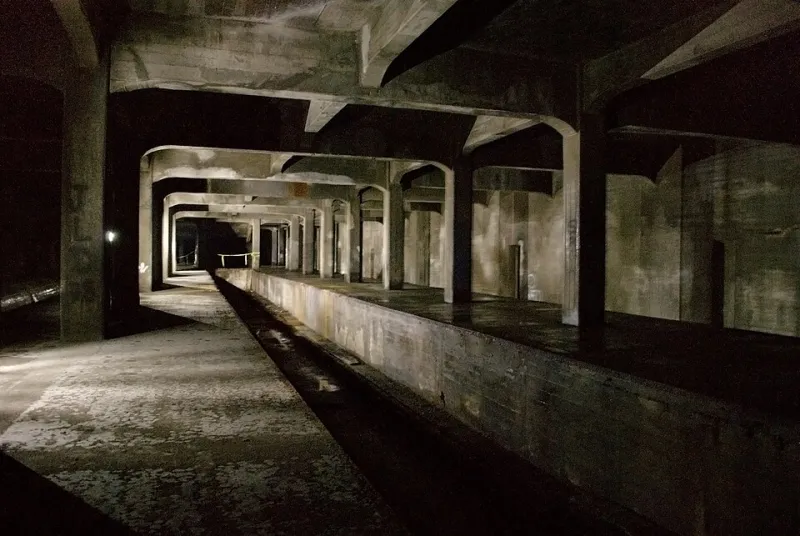
Starting in the late 1940s and accelerating through the 1960s, major casino operators began commissioning underground service networks that connected counting rooms, vault systems, loading docks, and in some cases, neighboring properties. These weren't rough utility tunnels — they were engineered spaces with reinforced concrete walls, ventilation systems, and in the larger operations, rail-mounted cart systems for moving currency trays without human hands touching them.
In Las Vegas, some of the older casino properties along Fremont Street — the original gambling corridor before the Strip took over — connected to shared underground infrastructure that also tied into early banking facilities. The idea was that cash could theoretically move from a casino cage to an armored transport pickup point without ever surfacing at street level. It was elegant, paranoid, and exactly the kind of thing that gets urban explorers excited decades later.
What Explorers Are Actually Finding
Access to these spaces varies wildly. Some are sealed behind active casino properties that have been bought, sold, and renovated so many times that the original tunnel entrances were simply walled over during construction. Others are accessible through adjacent buildings — old hotels, parking structures, and utility corridors that share foundation walls with long-demolished gambling halls.
Explorers who've documented these spaces describe a consistent aesthetic: the further you get from the main vault rooms, the rawer the construction gets. Finished spaces near the counting rooms often retain remnants of their original purpose — steel door frames stripped of their vault doors, pneumatic tube terminals still mounted to walls, tiled floors cracked but intact. Further out, in the service corridors, it's bare concrete, rusted conduit, and the occasional chalk marking from a construction crew that hasn't been back in forty years.
In Atlantic City, the situation is slightly different. The casino boom there came later — post-1978, after New Jersey legalized gambling — and the underground infrastructure reflects a more modern construction approach. Some of the older hotel-casino complexes built on the Boardwalk used basement-level connecting corridors to manage high-volume cash operations and staff movement. As several of those properties closed or were demolished following the city's casino contraction in the 2010s, portions of those basement systems became accessible.
Chicago presents its own version of this history. The city's connection to underground infrastructure is well-documented — the old freight tunnel system beneath the Loop is famous — but fewer people know that several of the city's mid-century gambling operations, some of them semi-legitimate and some emphatically not, used basement and sub-basement spaces for cash handling and, in some cases, escape routes. Explorers working the old Near North Side and River North neighborhoods have found sealed stairwells leading to basement rooms with reinforced walls and door hardware that doesn't match anything you'd put in a storage room.
The Speakeasy Connection
It's worth noting that the underground casino infrastructure of the mid-20th century didn't emerge from nowhere. It evolved directly from the Prohibition-era speakeasy networks that had already normalized the idea of running a commercial operation underground and out of sight.
Several cities — Chicago being the most obvious example — had speakeasy networks in the 1920s and early 1930s that used existing basement connections between buildings to move bootleg liquor and provide escape routes during raids. When Prohibition ended and gambling became the next semi-legal gray zone, the same operators, and in some cases literally the same buildings, adapted those underground connections for new purposes.
Explorers who've found remnants of both eras in the same space describe it as a kind of layered archaeology. You'll find a 1960s-era steel door frame sitting in a passage that clearly predates it by thirty years, the older brick arch still visible above the newer concrete lintel. It's physical evidence of how American underground economies evolved and adapted without ever quite disappearing.
The Preservation Problem
Here's the uncomfortable reality: almost none of this is being formally documented or preserved. Casino properties change hands constantly, and new owners have little incentive to catalog the underground infrastructure they've inherited. Demolition is common. Renovation is more common. In both cases, the sub-grade spaces are usually the first to go — filled in, sealed over, or simply ignored until they become a structural liability.
The urban exploration community has become, almost by accident, the primary documentation force for these spaces. Photographs, hand-drawn maps, and first-person accounts posted to forums and wikis represent the most complete record that exists of what some of these spaces look like. That's a fragile archive, dependent on the continued interest of people willing to do the work without institutional support.
For anyone interested in the intersection of American gambling history, mid-century urban design, and the hidden logic of how cities actually function, these underground spaces are genuinely irreplaceable. The question is whether enough people find them before the concrete pours in.