When the Cameras Stopped Rolling: Exploring America's Abandoned Film Studios and Backlots
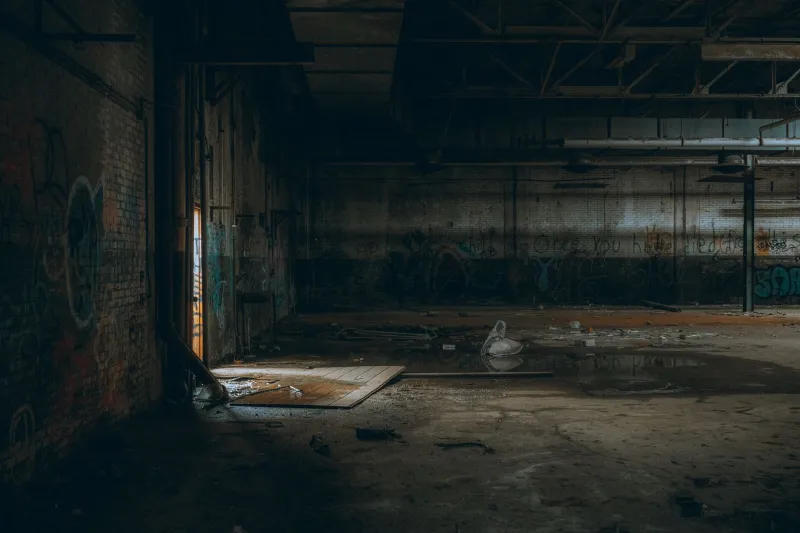
There's a particular kind of strangeness to walking through an abandoned film studio. You're standing in a space that was purpose-built to be something it wasn't — a fake New York street, a Wild West saloon, a spaceship interior — and now that illusion has been layered over with a second layer of unreality: genuine decay. The fake brick is crumbling. The painted sky backdrop is peeling. The prop furniture, arranged just so for a camera angle that no longer exists, is rotting under a collapsed section of roof. It hits different than a shuttered factory or an empty office building. This place was already pretending.
Urban explorers have been quietly documenting these sites for years, and what they're finding paints a pretty fascinating picture of an industry that once sprawled far beyond Hollywood's zip code.
The Regional Studio Boom Nobody Talks About
Most people think of American filmmaking as a Los Angeles story, maybe with a New York footnote. But for a good chunk of the twentieth century, regional film production was genuinely scattered. Florida had a legitimate studio corridor — not just the theme park stuff, but actual independent production facilities in Jacksonville, Tampa, and the Orlando area that predated Disney's expansion. The Carolinas developed a real production infrastructure starting in the 1980s. Texas had facilities tied to both commercial production and independent cinema. Chicago supported a robust commercial and industrial film industry that required serious studio space.
A lot of those facilities are gone now, consolidated out of existence when streaming economics and tax incentive competition reshuffled the whole industry. What got left behind is a pretty wild collection of partially stripped, partially intact production infrastructure.
What Explorers Are Actually Finding
Soundstages are usually the first thing people want to see, and they're often the most structurally compromised. These are enormous, deliberately isolated buildings — thick walls for sound dampening, minimal windows, huge interior volumes. When they're abandoned, they become moisture traps. Explorers consistently report the same conditions: standing water on concrete floors, grid systems overhead draped in fallen cables, lighting rigs that have partially collapsed, and the distinctive smell of mold mixing with old electrical insulation. The scale is disorienting. You're used to seeing these spaces packed with equipment and crew. Empty, they feel almost geological.
Prop warehouses are where things get genuinely interesting. Studios accumulated props over decades, and when a facility closes suddenly — or slowly hemorrhages cash until the lights just stop coming on — that inventory often gets left in place. Explorers have documented everything from period-accurate furniture collections to racks of costumes still on hangers, from fake food displays to fully assembled set pieces that were apparently too bulky to bother moving. One frequently photographed facility in the Southeast still has an entire fake diner interior sitting in a warehouse, booths and counter stools intact, the kind of generic American greasy spoon that appeared in approximately ten thousand TV movies.
The backlots are where the photography tends to get the most attention online. Outdoor sets — those permanent or semi-permanent exterior constructions that could double as various locations — have a specific visual quality that's hard to replicate. A Western street facade with the fronts intact but nothing behind them, surrounded by encroaching vegetation. A generic small-town main street with real weeds pushing up through the fake sidewalk. These images circulate a lot in urban exploration communities because they nail that double-unreality thing so cleanly.
The Infrastructure Nobody Films
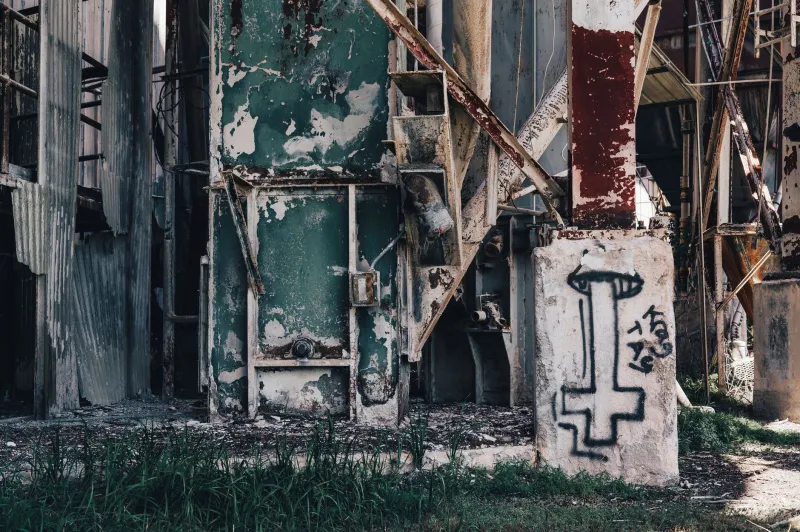
Beyond the glamorous stuff, abandoned studios contain a lot of purely functional infrastructure that most people never think about. Power distribution systems built to handle the enormous electrical loads of professional lighting rigs. Water storage and supply systems for practical effects work. Machine shops for set construction. Paint bays with ventilation systems sized for large-scale work. Camera and equipment vaults, sometimes still containing odds and ends too outdated or damaged to be worth hauling out.
Explorers with a technical bent find this stuff just as interesting as the set pieces. The engineering required to run a working film production facility was substantial, and the abandoned versions of these systems tell a story about how the industry actually operated day-to-day rather than the glamorized version.
The Overlay Problem
One complication that comes up repeatedly in explorer accounts: many of these sites have been partially repurposed, partially demolished, or partially redeveloped, leaving a confusing layered landscape. A studio complex might have its main soundstages converted to warehouse space while the backlot sits untouched. Or a developer might have torn down the primary structures while leaving secondary buildings and infrastructure in place. This makes navigation genuinely tricky and means that the "abandoned studio" you've read about might be a mix of active commercial tenants, derelict spaces, and outright ruins all sharing the same fenced perimeter.
Explorers emphasize doing serious research before visiting anything like this. Ownership situations are frequently murky — studios changed hands multiple times, went through bankruptcy proceedings, got parceled out to different buyers. What looks like a single abandoned site might have three different owners and wildly different legal statuses for different sections.
What Gets Preserved and What Doesn't
The preservation record for these places is pretty grim, honestly. Unlike an ornate theater or a distinctive industrial building, film production facilities were designed for function, not architectural legacy. Soundstages are big boxes. Backlot sets were built cheap and fast. There's rarely a preservation constituency fighting to save them, and the land they sit on is often valuable enough to make redevelopment financially attractive.
A few facilities have found second lives — converted to event spaces, repurposed for other kinds of production work, or absorbed into larger entertainment campuses. But the ones that fall through the cracks tend to fall hard and fast. The combination of large structures, expensive maintenance requirements, and limited alternative uses means that once a studio stops being a studio, the clock starts ticking pretty quickly.
What urban explorers are doing by documenting these places — photographing the prop warehouses, mapping the backlot layouts, cataloging what's still intact — is creating a record that wouldn't otherwise exist. Film historians and industry researchers have started paying attention to this documentation, because in a lot of cases it's the only surviving evidence of what these facilities actually looked like in operation.
Going In
If you're thinking about exploring in this space, the usual cautions apply with a few extras specific to studio facilities. The structural situation in soundstages can be genuinely dangerous — those big roofs span enormous distances, and when they start to go, they go dramatically. Prop warehouses are fire hazards by definition; decades of accumulated materials in an enclosed space with compromised electrical systems is not a combination to take lightly. And the ownership situation, as mentioned, is complicated enough that you should do real homework before assuming a site is truly abandoned rather than just temporarily inactive.
The reward for that preparation is access to something pretty singular: spaces that were designed to manufacture reality, now manufacturing something more like its opposite.