Blades, Boots, and Disco Balls: Inside America's Abandoned Ice Rinks and Roller Palaces
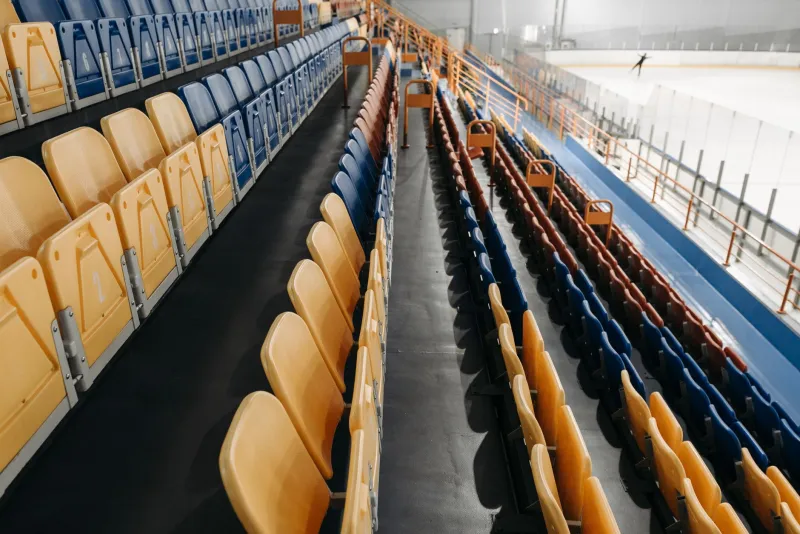
There's something genuinely strange about walking into a building where the air still feels a few degrees colder than it should. Ice rinks have a way of holding onto their past even after the refrigeration systems have been dead for years — the insulated concrete, the thick walls, the residual chill that seeps out of the infrastructure itself. Pair that atmosphere with the visual wreckage of a roller disco palace frozen mid-groove, and you've got one of the more surreal urban exploration experiences available in the United States right now.
These places are out there in every region of the country. Suburban strip rinks that hosted rec hockey leagues and Saturday afternoon birthday parties. Elaborate roller disco palaces built during the late 1970s boom that tried to out-glam each other with mirrored ceilings and neon trim. Indoor skating complexes attached to defunct shopping malls. Each one tells a different story about how Americans spent their leisure time — and how quickly those habits can evaporate.
The Ice Rink Interior: What Explorers Actually Find
Walking onto a dead ice surface is a genuinely odd experience. The rink floor itself — depending on how long the facility has been closed — might be cracked concrete, a shallow puddle of permanently standing water, or in rarer cases, an actual frozen surface that nature has partially reclaimed. The boards that once lined the perimeter are often still standing, sometimes still painted with the ghost logos of long-gone local sponsors. Hardware stores. Pizza chains. Regional car dealerships that folded before the rink did.
The penalty boxes and player benches are usually intact. Explorers frequently find forgotten equipment tucked underneath — old hockey sticks, pucks, a single skate boot missing its blade. The locker rooms tend to be more stripped, though the metal benches and ventilation grates remain. The smell in those rooms is something else entirely: mildew, old rubber, and something synthetic that's difficult to name.
The Zamboni garage is always a highlight. These machines — essentially oversized ice-resurfacing sleds — are expensive enough that most operators tried to remove them when facilities closed. But plenty got left behind, either because the buildings were abandoned quickly or because the machines were too degraded to be worth moving. Finding a vintage Zamboni sitting in its bay, paint faded, tires flat, is the kind of discovery that gets shared widely in the urban exploration community. Some of the older machines date back to the 1960s and 70s and look almost sculptural in their decay.
Scoreboards, Sound Systems, and the Tech of a Bygone Era
The scoreboards in older ice rinks are their own category of artifact. Pre-digital systems used bulb-lit number panels and manual flip mechanisms — the kind of equipment that took a dedicated operator to run during every game. Many of these are still hanging from the rafters in abandoned facilities, tilted at odd angles, some bulbs long burned out, others somehow still intact. A few explorers have documented hand-painted scoreboards that predate the electrical era entirely.
The sound systems tell a parallel story. Ice rinks ran on straightforward PA setups — tinny ceiling-mounted speakers, a booth near the entrance where a DJ or attendant controlled the music. Roller rinks, though, were a different animal entirely. The roller disco era demanded serious audio infrastructure. Explorers frequently find multi-speaker ceiling arrays, wiring harnesses that ran the length of the building, and DJ booths that were built as permanent architectural features rather than afterthoughts. Mixing boards, turntable mounts, even the occasional reel-to-reel system have turned up in these spaces.
Roller Disco Palaces: A Different Kind of Ruin
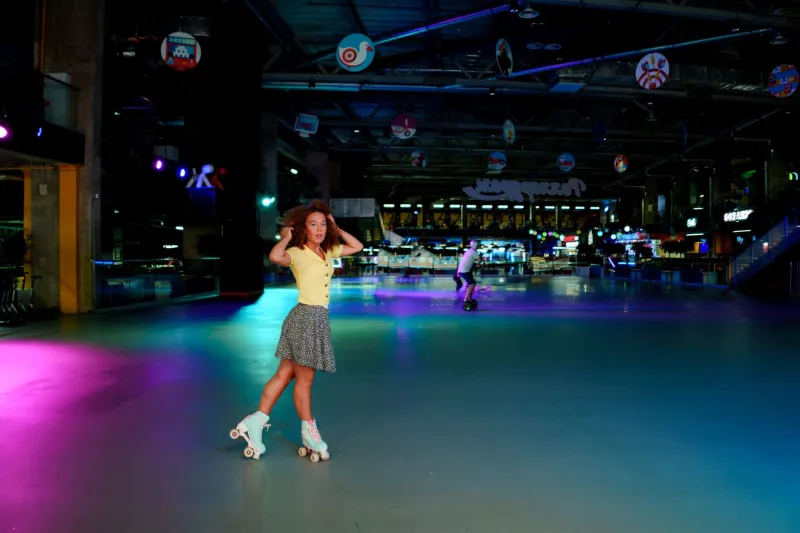
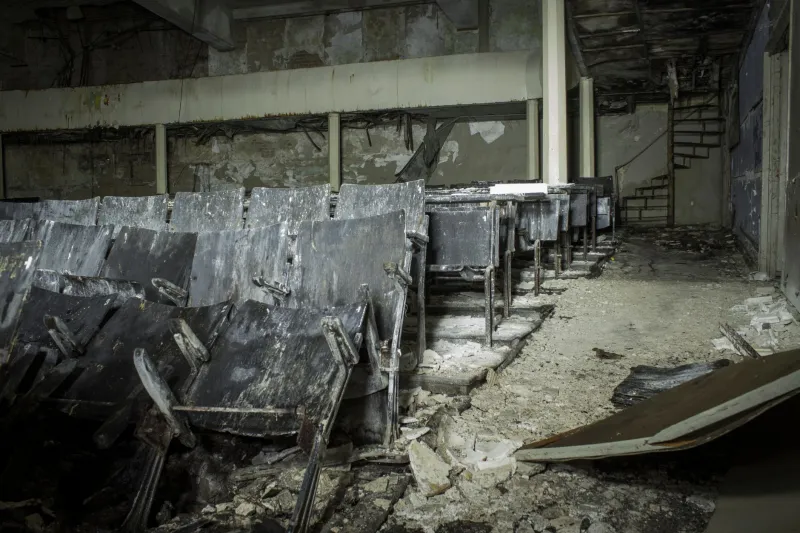
If ice rinks are eerie, roller disco palaces are theatrical. The design language of the late 1970s and early 1980s roller rink was maximalist by default — the more mirror, neon, and carpet pattern, the better. Walking into one of these places today means encountering layers of visual chaos in various states of collapse.
The disco balls are the iconic find, and they're more common than you'd expect. Large mirrored spheres were expensive but durable, and a surprising number of them are still hanging in abandoned roller palaces across the Midwest and Southeast. Some are tarnished, missing tiles, swaying slightly in drafts from broken skylights. Others are in remarkable condition, occasionally catching light from a gap in the roofing and throwing fragmented reflections across the whole room.
The carpet is always a talking point. Roller rink carpet was selected specifically to be loud — geometric patterns in colors that would have been aggressive even by 1970s standards. In abandonment, that carpet becomes a timeline of water damage, mold, and slow disintegration. The patterns are still visible in drier sections, faded but recognizable, and they function almost like a signature of the era.
Skate rental counters, usually built as long wooden structures near the entrance, are typically still in place. Cubbyholes where patrons stored their street shoes line the walls behind the counter. The rental skates themselves are frequently gone, but the boot-sized wooden slots remain, sometimes with forgotten personal items still tucked inside — a single glove, a folded receipt, a kid's drawing.
Regional Patterns and Why These Places Closed
The geography of abandoned skating venues follows recognizable patterns. The Sun Belt saw a massive roller rink construction boom in the 1970s and early 80s, particularly in Florida, Texas, and the Carolinas. Many of those buildings are now in various states of abandonment, their metal-frame construction aging less gracefully than the brick-and-mortar facilities built in the Northeast and Midwest during the postwar era.
Ice rinks tend to cluster around mid-size cities in the northern half of the country — places where youth hockey had enough of a following to justify the infrastructure. When those facilities close, it's usually a combination of deferred maintenance costs (refrigeration systems are brutally expensive to repair), competition from newer multiplex entertainment venues, and the slow demographic shifts that emptied out the surrounding neighborhoods.
For roller rinks, the timeline is slightly different. The disco-era facilities that survived into the 1990s often reinvented themselves as inline skating venues during the rollerblading boom, then struggled to find an identity once that trend faded. Family entertainment centers with go-karts and laser tag pulled the younger demographic away. The ones that hung on longest were usually in smaller markets without much competition — which also means they're now in communities with fewer resources to redevelop the properties.
What Makes These Spaces Worth Documenting
There's a temptation to treat abandoned leisure spaces as purely nostalgic objects — relics of simpler times, places where people were just having fun before everything got complicated. But the explorers doing serious documentation work in these buildings are capturing something more nuanced than that.
These venues were economic anchors in their communities. They employed people, hosted events, served as the social infrastructure for entire generations of kids who grew up in their zip codes. When they close, that loss is real and specific, and the physical remnants carry evidence of it. The hand-painted birthday party signs still taped to a cinder block wall. The trophy case with local hockey league hardware still inside. The DJ booth where somebody spent thousands of Saturday nights keeping the floor full.
If you're planning to document one of these spaces, the usual best practices apply — research the ownership and legal status of the property beforehand, go with a partner, and bring more light sources than you think you'll need. These buildings tend to be large, dark, and structurally unpredictable in their older sections. But for explorers willing to do the preparation, the payoff is consistently remarkable.