Rewind, Never Return: What Explorers Are Finding Inside America's Abandoned Video Rental Stores
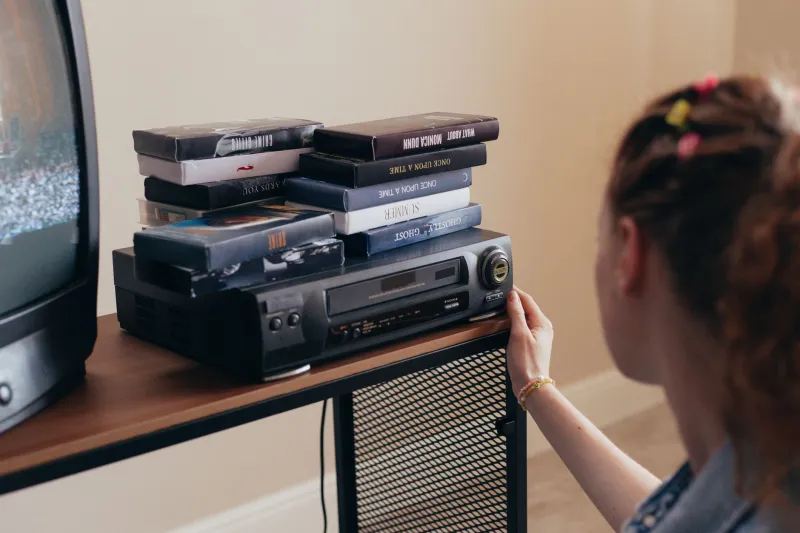
There's something almost cinematic about pushing open the door of an abandoned video rental store. The carpet — always that same aggressively patterned carpet — is still there. The drop ceiling tiles have started to bow. And in the back corner, sometimes still racked in alphabetical order, are hundreds of VHS tapes that nobody ever came back for.
Urban explorers across the US have been quietly cataloguing these spaces for years, and what they're finding tells a surprisingly specific story about how fast American consumer culture can flip a switch and walk away.
The Blockbuster Effect
At its peak in the early 2000s, Blockbuster operated more than 9,000 stores across the country. By 2014, the corporate chain had filed for bankruptcy and shuttered nearly all of them. That's a lot of real estate to abandon — and a lot of blue-and-yellow signage left dangling over strip mall storefronts.
Some of those locations got repurposed quickly. Others didn't. Explorers in mid-size cities and rural towns have been turning up former Blockbuster shells where the interior buildout is still largely intact: the long rental counters, the sectioned-off new release walls, the little cubbies where box covers faced outward while the actual tapes sat in drawers behind them. In a few cases, explorers have posted photos showing membership card spinners still sitting on the counter, receipts half-curled in old thermal printers, and promotional cardboard standees for movies that came out when flip phones were still cutting-edge.
The Bend, Oregon location — famously the last remaining Blockbuster on earth — is very much open and very much a tourist attraction. But the ghost versions of its 9,000 siblings are scattered across America in various states of decay, and they're starting to draw a different kind of visitor.
The Independents Hit Different
If the old Blockbuster locations feel like corporate ruins, the abandoned independent video stores feel like something more personal. These were places with handwritten staff recommendation cards taped to the shelves. Cult horror sections crammed into a back room. A guy named Dave who knew every Cronenberg film and wasn't shy about telling you.
Explorers who've documented these smaller shops describe a more chaotic archaeology. Without the corporate uniformity of a chain, every independent store has its own layout, its own organizational logic, its own accumulation of weird stuff. One explorer photographing a shuttered shop in rural Pennsylvania found an entire section dedicated to local amateur productions — VHS tapes of high school plays, church pageants, and at least one self-produced kung fu movie — all mixed in with the regular rental stock.
Genre sections in these stores often reveal a lot about local taste and the owner's obsessions. Explorers have found independent shops with enormous foreign film catalogs, deep cuts of 1970s Italian horror, or surprisingly complete collections of made-for-TV movies that streaming services have never touched. Some of this material genuinely doesn't exist in digital form anywhere. The tapes in these stores aren't just nostalgic artifacts — in some cases, they're the last surviving copies.
What Gets Left Behind
The inventory of objects explorers typically encounter in these spaces reads like a very specific kind of time warp.
Rental membership cards and paper files are common finds, especially in the smaller shops that never fully digitized their systems. Some explorers have found entire filing cabinets of handwritten customer records — names, addresses, rental histories, and yes, the occasional notation about an unreturned tape. Promotional materials are another staple: oversized movie posters still tacked to walls, cardboard display pieces for films from the mid-to-late nineties, those goofy foam standees that used to live near the entrance.
Technology artifacts show up too. Rewinding machines — those little standalone devices stores used to charge customers a fee to use, or just offered as a courtesy — are weirdly common finds. So are the early DVD display cases, the bulky security cases that VHS tapes got locked into to prevent theft, and the label makers used to stamp every single tape with the store's name and a rental number.
In the back rooms and offices, explorers sometimes find the operational side of things: scheduling binders, employee handbooks, vendor invoices, and the occasional time clock with punch cards still slotted into the rack.
The Kiosk Graveyard Problem
Not all video rental archaeology involves buildings. The rise and fall of DVD rental kiosks — Redbox being the dominant survivor, but far from the only player — left its own trail of abandoned infrastructure. Explorers and urban photographers have documented decommissioned kiosks in parking lots, in grocery store vestibules, and in the lobbies of apartment complexes, still plugged in or still bolted to concrete pads, their screens dark, their disc carousels empty.
These kiosks represent a different chapter of the same story: the industry's attempt to compete with streaming by shrinking the footprint rather than abandoning physical media entirely. Some of them were simply unplugged and left in place. Others were removed but left in storage areas behind strip malls, stacked alongside broken shopping carts and defunct ATM machines.
Why Explorers Keep Coming Back
There's a reason these spaces generate so much engagement in urban exploration communities. Unlike an abandoned factory or a shuttered hospital, a video rental store is a place that almost everyone in a certain age range has a direct emotional connection to. The Friday night ritual of walking the aisles, the arguments about what to pick, the specific smell of those plastic cases — it's sensory memory for a huge chunk of the American population.
Walking into an abandoned version of that space hits differently than most exploration sites. It's not just decay and architecture. It's the physical remains of something that felt permanent and then disappeared almost overnight. Netflix launched its streaming service in 2007. By 2010, the industry was in freefall. That's a remarkably short window for the complete collapse of a retail category that had defined weekend entertainment for two decades.
Explorers documenting these locations often note that the abandonment feels abrupt in a way that other ruins don't. A factory closes over years, with equipment being stripped out and sold. A video store closes and sometimes — especially the independent ones — it just stops. The door gets locked. The stuff stays.
The Preservation Question
Some explorers and archivists have started raising questions about what happens to the physical media left in these locations. VHS tapes degrade. The magnetic tape inside them doesn't last forever, and a lot of the content on those independent shop shelves has never been digitized. A few community archivists have made efforts to recover tapes from abandoned locations before buildings are demolished or cleaned out, working to preserve regional and obscure content that would otherwise disappear entirely.
It's a niche concern, maybe, but it points to something real: these abandoned stores aren't just interesting to look at. They're holding material that the streaming era decided wasn't worth keeping, and the clock is running on how long any of it survives.
In the meantime, explorers keep pushing open those doors, walking those patterned carpets, and pulling tapes off shelves to read the back covers one more time. Be kind. Rewind. The store's been closed for fifteen years, but some habits are hard to shake.