Cubicle Cathedrals: What Explorers Uncover Inside America's Abandoned Corporate Campuses and Early Tech Parks
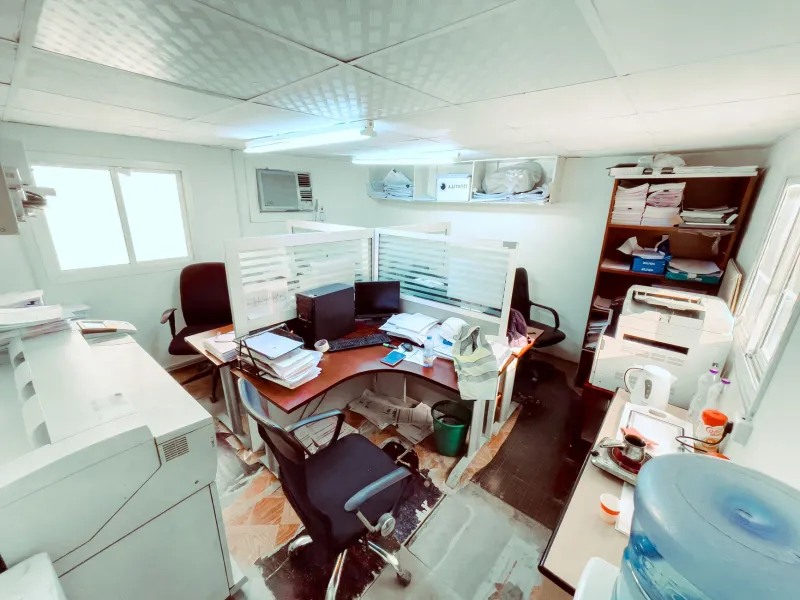
There's a particular kind of silence that settles over an abandoned office park. It's not the heavy, gothic quiet of a crumbling asylum or the eerie stillness of a shuttered amusement ride. It's something more bureaucratic — the silence of fluorescent lights that nobody ever thought to turn off until the power finally got cut, of motivational calendars frozen on months from a decade ago, of ergonomic chairs still tilted at the exact angle their last occupant left them.
Across suburban America, hundreds of these corporate ghost towns are quietly deteriorating behind chain-link fences and sun-bleached "For Lease" signs. From the early tech campuses of Silicon Valley's outer sprawl to the mid-century research parks of the Midwest's innovation corridors, explorers who push past the NO TRESPASSING tape are finding something unexpected: workplaces that feel less abandoned than simply paused.
The Architecture of Optimism
The office park as an American building type has a surprisingly idealistic origin story. Starting in the 1950s and accelerating through the 1980s, developers and corporations began moving white-collar work out of downtown towers and into campus-style complexes — low-slung buildings surrounded by manicured lawns, connected by covered walkways, designed to suggest that working here was somehow different. Better. More like a university than a job.
Explorers who document these spaces often comment on the architectural ambition baked into even mid-tier campuses. Atria with skylights meant to flood workers with natural light. Indoor courtyards with dead fountain basins still ringed by planters. Modular wall systems in colors that were cutting-edge in 1987 and deeply uncomfortable now. These buildings were designed to communicate a message — we are the future — and they broadcast it loudly, right up until the day they didn't.
The early tech campuses are especially rich in this department. Companies that rode the first wave of the personal computer boom built with extraordinary confidence, commissioning campuses that blended Silicon Valley informality with genuine architectural ambition. Explorers who've documented properties in places like the Research Triangle in North Carolina, the Route 128 corridor outside Boston, or the scattered tech parks ringing Austin have found buildings that still carry the DNA of that optimism: open floor plans before open floor plans were a cliché, dedicated "innovation rooms" with whiteboards still covered in diagrams, even the occasional slide or foosball table that predates the startup era by twenty years.
The Hardware Graveyard Problem
If there's one thing that separates tech campus exploration from poking around an old factory, it's the artifacts. Factories leave behind machinery too heavy to move. Office parks leave behind information — and occasionally, hardware that nobody thought was worth salvaging.
Explorers regularly turn up server racks from companies that no longer exist, prototype devices in various states of completion, and storage rooms packed floor-to-ceiling with obsolete equipment that was state-of-the-art when it was boxed up. There's something genuinely strange about holding a piece of hardware from a company whose name you vaguely remember from a 1990s tech magazine — a machine that represented real money, real hope, real careers — and realizing it's now just an interesting shape rusting in a corner.
Documentation is important here. A lot of explorers who focus on tech campuses have a background in tech themselves, and they bring that context to what they're photographing. They can identify what something was, which makes the images hit differently. A photo of random industrial debris is one thing. A photo of a prototype that never made it to market, sitting in the original foam packaging, in a room that's been sealed for fifteen years — that's a whole story.
The Human Scale of It
Beyond the hardware and the architecture, what consistently surprises first-time tech campus explorers is how personal these spaces feel. Factories are impersonal by design. Office spaces are not. People spend the majority of their waking lives in these buildings, and they leave evidence.
Break rooms are the most obvious example. Explorers find coffee mugs with company logos. Vending machines still stocked with snacks that expired years ago. Birthday cards pinned to bulletin boards. Someone's ergonomic lumbar support pillow, left on a chair in a conference room as if they're coming back after lunch. The accumulation of small personal objects in these spaces creates a portrait of working life that's oddly moving — all these tiny acts of nesting, of making a fluorescent-lit cubicle feel slightly more like somewhere a person actually lives.
Personal desks are particularly striking. In a fast evacuation — a sudden bankruptcy, a rapid acquisition that relocated staff overnight — people leave things behind that they clearly meant to take. Family photos. Handwritten notes. In one famously documented East Coast tech campus, explorers found an entire desk still set up with a monitor, keyboard, and a half-finished cup of instant noodles that had long since fossilized in place. Whoever sat there left mid-afternoon and never came back.
Reading the Layers
One of the things that makes corporate campuses interesting from an exploration standpoint is that many of them have layers — evidence of multiple tenants, multiple eras, multiple failed reinventions. A building that started as a semiconductor company's headquarters might show signs of having been subdivided into smaller suites for startups, then partially occupied by a medical device company, then used for storage, then abandoned entirely.
You can read that history in the walls. Different generations of carpet tile. Competing signage systems from different decades. Server room infrastructure bolted over original telephone closets. Drop ceilings lowered over what were once impressive exposed-beam spaces. It's architectural stratigraphy — each layer telling you something about who was here, what they needed, and why it didn't work out.
Getting There and Getting In
A quick note on the practical side of things: suburban office parks present some unique access challenges. Unlike downtown buildings that might be overlooked in a dense urban environment, a standalone campus surrounded by a parking lot offers very little cover. Security patrols, even at long-vacant properties, are more common than you'd expect — liability concerns keep property managers engaged long after the last tenant has cleared out.
That said, many of these campuses sit in genuine legal gray areas. Some have been formally decommissioned, some are caught in bankruptcy proceedings, and a few have been partially opened for legitimate purposes like film shoots or art installations, which can create access opportunities worth researching. As always, know your local trespassing laws, don't damage anything, and don't go alone.
Why These Places Matter
It's easy to be glib about abandoned office parks — easier, maybe, than about a shuttered hospital or a forgotten theater. Cubicles don't carry the same romantic weight as a gilded auditorium ceiling. But these campuses are genuine historical artifacts. They document the physical shape of American economic aspiration at specific moments in time, and they're disappearing fast. Demolition or redevelopment claims them constantly, and unlike a grand civic building, nobody's lobbying to preserve the 1988 corporate atrium.
The explorers documenting them are doing something real. These photos and reports are increasingly the only record of what these spaces looked like, what they contained, and what they meant to the people who worked inside them. In twenty years, that's going to matter more than it seems like it does right now.