Below the Food Court: Exploring the Subterranean Labyrinths Beneath America's Dead Malls
Most people who remember their local mall think about the food court smell, the echo of pop music drifting out of chain stores, the slow weekend ritual of walking laps between anchor tenants. What almost nobody thought about — ever — was what was happening six feet below their sneakers.
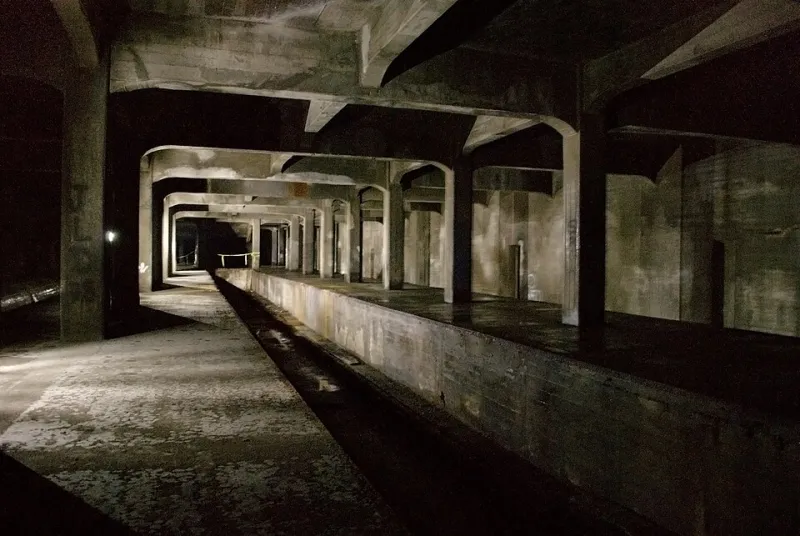
Beneath the retail floor of virtually every major American shopping mall built between the 1960s and the 1990s runs a parallel universe. Loading docks connected by service corridors. Mechanical rooms the size of gymnasiums. Multi-level parking structures sealed off from daylight by concrete ceilings so thick they muffle everything. Freight elevator shafts that haven't moved a pallet in fifteen years. This is the infrastructure layer, and when the malls above die, it doesn't disappear. It just goes dark.
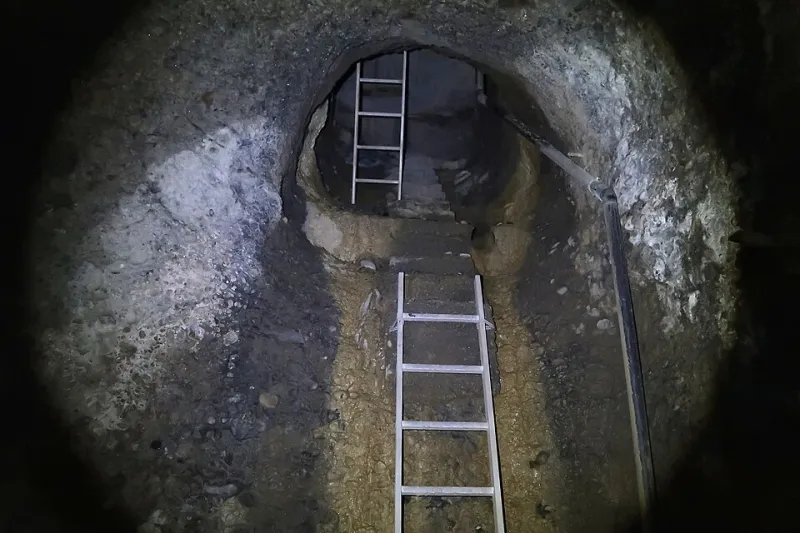
Urban explorers who've spent time in these spaces describe them in terms that sound less like retail archaeology and more like deep-cave diving — the total absence of natural light, the disorienting sameness of every corridor, the way sound behaves differently when you're surrounded by eight inches of reinforced concrete on all sides.
The Engineering Ambition Nobody Talked About
Here's the thing about mid-century mall construction that most people don't appreciate: these were genuinely sophisticated engineering projects. The developers who built regional malls in the 1970s weren't just throwing up big boxes. They were designing integrated systems — climate control networks, electrical distribution grids, waste management infrastructure, and logistics pathways — all of it threaded through underground and sub-floor spaces that had to function invisibly while thousands of shoppers moved around above them.
The service tunnel systems were particularly elaborate. Major malls often featured dedicated underground freight routes that allowed delivery trucks to move merchandise from loading docks directly to individual store stockrooms without ever crossing the public retail floor. Think about that for a second. The bananas arriving at the food court pretzel stand and the winter coats being unloaded for a department store were traveling through completely separate corridors, on separate schedules, managed by a logistics layer that customers were never meant to see.
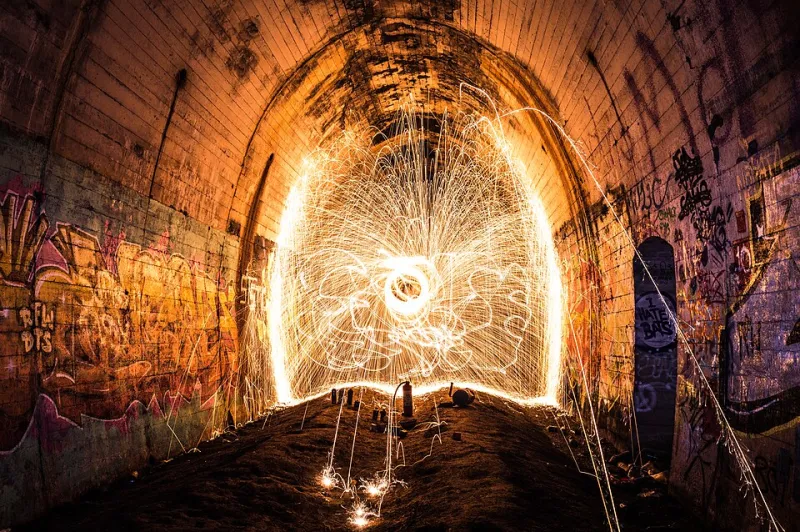
Explorers documenting these spaces frequently note the signage systems still clinging to the tunnel walls — color-coded painted lines on the floor indicating which corridor led where, store numbers stenciled above doorways, directional arrows pointing toward loading zones that haven't received a truck since the Obama administration. It's a wayfinding system designed for a workforce that no longer exists.
What the Parking Structures Actually Look Like
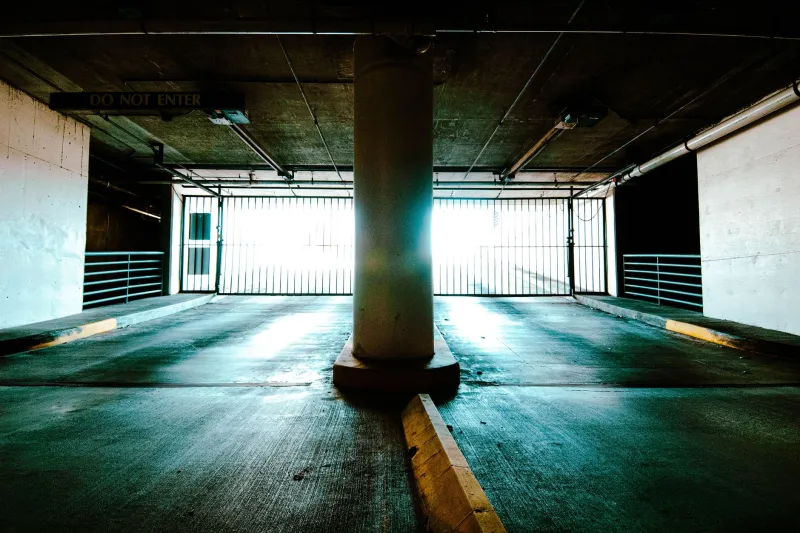
Abandoned mall parking garages occupy a specific category of eerie that's hard to describe without experiencing it. Unlike surface lots, which at least get ambient daylight and the occasional pigeon, underground parking structures are sealed environments. When the power goes, they go completely dark. Not dim — dark. The kind of dark where your flashlight beam feels like it's being swallowed.
The structures themselves are often enormous. A mid-sized regional mall might have two or three levels of underground parking capable of holding fifteen hundred cars. The columns come at regular intervals, the ceiling clearance is just barely enough to feel claustrophobic, and the painted parking space lines — still bright in some sections, completely faded in others — create a strange visual rhythm that stretches off into the darkness.
Explorers consistently mention a few sensory signatures that define these spaces. There's usually standing water somewhere, pooled in the low points of drainage channels that haven't been maintained in years. There's a smell that veterans describe as a combination of motor oil, old concrete, and something vaguely biological — mold working its way through the expansion joints. And there's the sound of dripping, which in a space that large takes on an almost musical quality, echoing off surfaces in ways that make it genuinely difficult to locate the source.
Abandoned vehicles turn up with surprising regularity. Cars left in mall parking structures during final closure events, or simply forgotten during the slow decline of a dying property, sit exactly where they were parked — sometimes still with expired parking tickets under the wipers, sometimes with personal items still visible through the windows.
The Mechanical Heart
If the service tunnels are the circulatory system of a dead mall, the mechanical rooms are the stopped heart. These are the spaces where the HVAC systems, electrical switchgear, plumbing manifolds, and fire suppression infrastructure lived — and in many cases, still live, even if nothing is running.
Mechanical rooms in large malls could span thousands of square feet, and the equipment inside was industrial-grade. Chillers the size of small trucks. Boilers that required licensed operators. Electrical panels with enough breakers to power a small neighborhood. Explorers who've documented these spaces note that the equipment is often still largely intact — too heavy and too specialized to be worth salvaging, it just gets left in place when the property closes.
The layer of dust on everything in these rooms has a particular quality — fine and uniform, settling equally across every surface over years of total stillness. Control panels that once required constant monitoring sit frozen at their last readings. Maintenance logs hang on clipboards near doorways, the last entries dated years or decades back. In some locations, explorers have found personal effects left by maintenance workers — coffee mugs, safety glasses, worn work gloves — as if the crew stepped out for a break and simply never returned.
Finding Your Way In (and Out)
Access to mall substructures varies wildly depending on the property's current status. Some defunct malls are in active legal limbo — owned by investment entities or municipalities trying to figure out what to do with them — and may have functional security or regular patrols. Others have been genuinely abandoned and left to decay, with access points that have deteriorated over time.
The standard advice from experienced explorers applies here with extra emphasis: never go alone, always tell someone where you're going, and carry redundant light sources. In an enclosed underground parking structure, a single flashlight failure is a genuinely serious situation. The spaces are large enough that disorientation happens fast, and without natural light references, it's easy to lose track of which direction leads to an exit.
Navigation is its own challenge. The color-coded floor markings and stenciled signage that once guided mall employees are helpful if they're still legible — but years of water intrusion and general decay can make them unreliable. Experienced explorers often sketch rough maps as they move through a space, marking exit points and key landmarks before going deeper.
Why These Spaces Matter
There's a tendency to think of mall substructures as purely utilitarian — the unsexy mechanical guts that made the retail experience upstairs possible. But the explorers who've spent serious time in these spaces tend to come away with a different perspective.
These underground networks are physical records of how American consumer culture actually worked at its peak. The logistics systems, the engineering solutions, the sheer scale of infrastructure required to support a regional shopping center — all of it is preserved down here in a way that the retail floors above, stripped of merchandise and signage, simply aren't. The service tunnels tell you more about what a mall really was than the empty anchor stores ever could.
And there's something genuinely striking about the contrast between what these spaces were designed to support and what they've become. Built to be invisible and functional, they're now the most permanent thing left — concrete vaults that will probably outlast every other element of the properties above them, quietly holding the memory of a retail era that's increasingly difficult to explain to anyone who didn't live through it.