Chalk Dust and Empty Bleachers: Inside the Closed Schoolhouses of Small-Town America
Of all the places urban explorers document, abandoned schools hit hardest. It's not just the decay — it's the specificity of it. A factory reads as industry; a school reads as childhood. When you push open a door and see a cursive penmanship poster curling off the wall, or a lunch menu from 1997 still taped inside the cafeteria, you're looking at the exact moment a community's daily rhythm stopped.
Why the Schools Went Dark
Rural America has been consolidating school districts for three generations. As farms consolidated and populations drifted toward cities, small towns that once supported their own K-12 buildings found themselves busing kids twenty or thirty miles to a regional campus. The old building — often the largest, sturdiest structure in town — gets emptied out over a single summer and locked.
Rust Belt towns tell a related story: population loss emptied classrooms that consolidation then finished off. The result is thousands of shuttered schoolhouses scattered across the map, from North Dakota prairie towns to Ohio river valleys, most sitting in legal limbo while districts, municipalities, and buyers argue over what to do with them.
What Explorers Find Inside
Schools abandon their contents more completely than almost any other building type. Nobody bothers to clear out a trophy case. So the finds are unusually intimate:
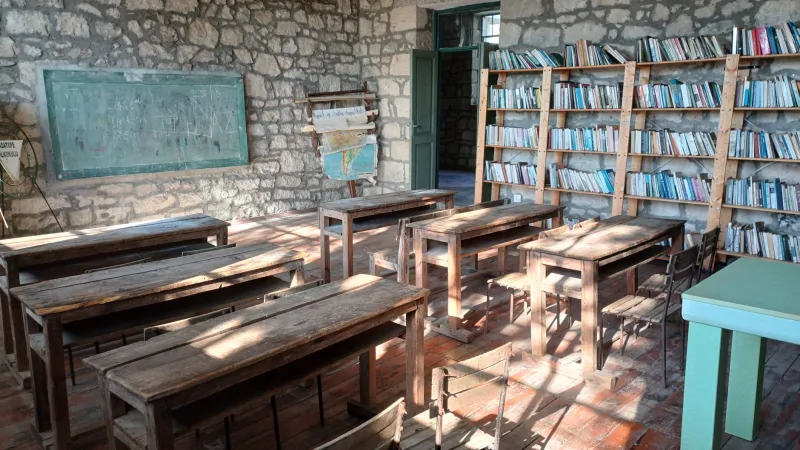
- Chalkboards with lessons still on them — a math problem mid-erasure, a motivational quote, a countdown to summer break.
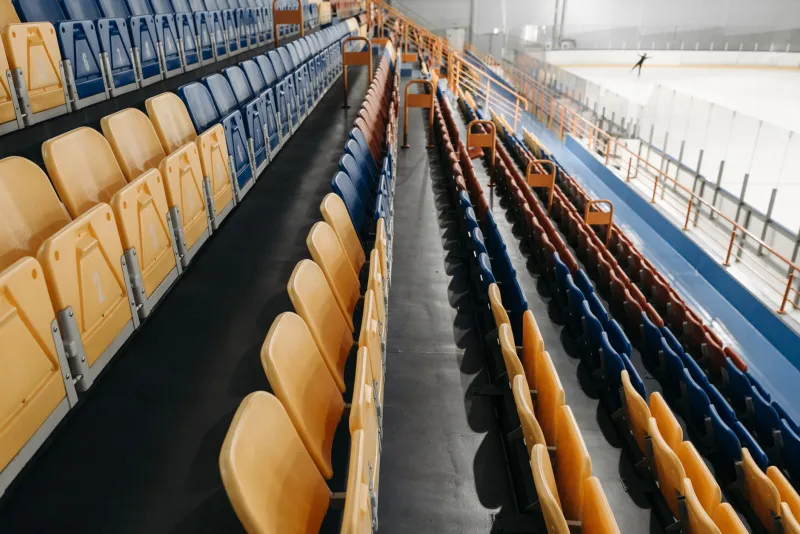
- Gymnasiums with intact bleachers and scoreboards, often the most structurally sound rooms in the building and the most haunting. A basketball hoop hanging over a buckled floor is a genre unto itself.
- Trophies, yearbook archives, and class photos — the single most emotionally loaded category of find in all of urbex. Document them, never take them.
- Libraries and classrooms with books still shelved, reading levels and all.
- The boiler room and fallout shelter signage, staples of mid-century school construction that add a whole architectural-history layer to any report.
The best explorers treat these artifacts as the story. A photo of a dusty hallway is fine; a photo of the art room's still-labeled supply cabinet is a story.
The Legal Reality — Read This Part
Schools are public property, which misleads a lot of people into thinking abandoned ones are fair game. They are not. A closed school is typically owned by the district, a municipality, or a private buyer, and trespassing laws apply in full. Some districts actively prosecute. Beyond the legal risk, schools are genuinely hazardous: old buildings mean lead paint, asbestos insulation and floor tile, failing roofs, and waterlogged floors that give way without warning. No photo of a trophy case is worth a fall through a rotten gym floor.
If a building is posted, sealed, or clearly under active redevelopment — skip it. Plenty of schools are documented legally through preservation groups, historical societies, and district-sanctioned walkthroughs before renovation.
The Fight for Second Lives
What makes school sites different from dead malls or empty factories is that the community usually wants them saved. Towns across the country have converted old schools into community centers, apartments, senior housing, and theaters. There's a well-established playbook — historic tax credits help — but it requires a buyer with vision and money, and small towns often have neither.
That's where documentation matters. Explorers' photo reports have genuinely contributed to preservation conversations, giving historical societies and grant writers visual evidence of what's worth saving. A building nobody photographs is a building nobody misses.
The bell isn't going to ring again in most of these places. But the lessons on the board, the names on the trophies, and the bleachers waiting patiently in the dark — those are worth recording while they're still there.