Ghost Signs and Empty Storefronts: Exploring the Vintage Commercial Corridors America's Retail Revolution Left Behind
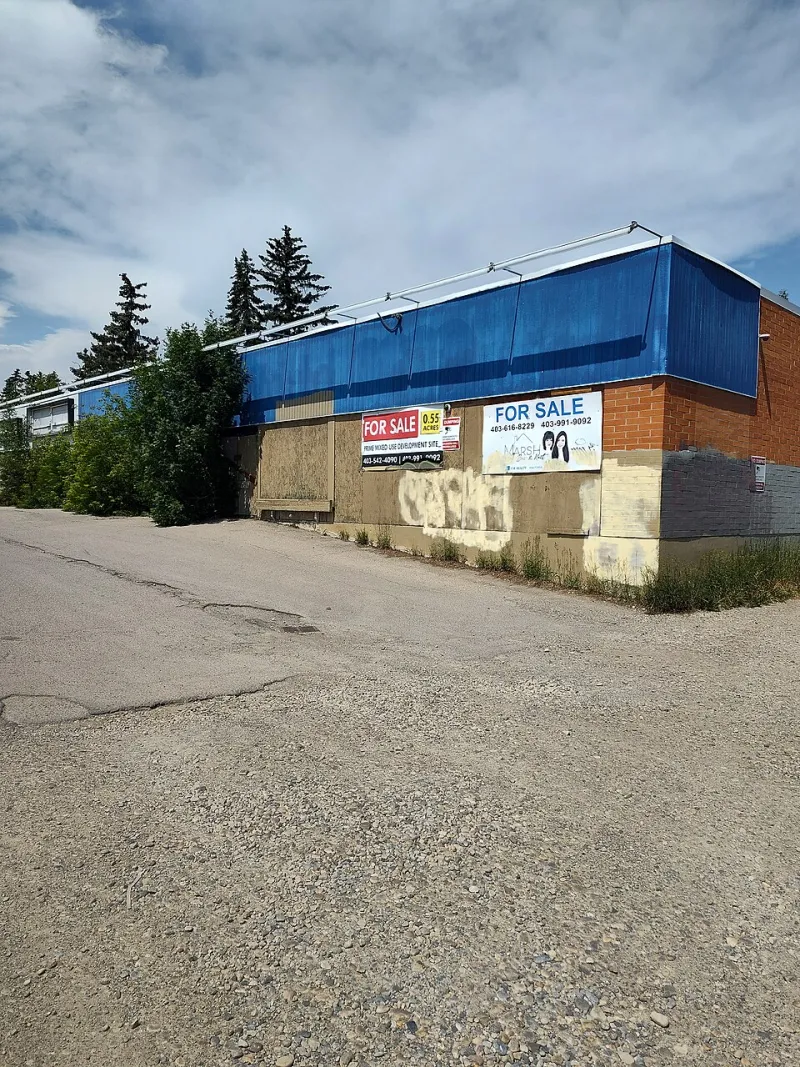
Photo: CnekYT, CC BY-SA 4.0, via Wikimedia Commons
Somewhere between the interstate on-ramp and the Walmart Supercenter, there's a stretch of road you've probably driven past without really seeing. A row of connected storefronts, maybe a dozen units long. Flat roof. Faded painted signage. A parking lot with weeds pushing through the asphalt cracks. A few units still occupied — a nail salon, a tax prep office, a church that moved in when the rent got cheap enough. The rest: dark windows, paper blocking the view inside, the ghosts of businesses that didn't survive the last few decades of retail transformation.
These places are everywhere in America. And for a growing corner of the urban exploration community, they're becoming some of the most compelling sites to document — not for dramatic decay, but for the density of cultural history packed into their neglected interiors and sun-bleached facades.
The Strip Mall as American Artifact
The American strip mall is, in architectural terms, not particularly beloved. Critics have spent decades cataloguing its sins: the car-dependent design, the visual clutter, the disposability built into the construction. But strip malls and their older cousins — the mid-century commercial corridor, the roadside business district, the Main Street that got bypassed when the highway moved — are also a remarkably honest record of how ordinary American communities actually functioned.
The earliest versions date to the 1920s and '30s, purpose-built clusters of storefronts designed around automobile access. By the postwar boom, they were proliferating across every growing suburb in the country. The 1950s and '60s produced some of the most architecturally interesting examples — exuberant Googie-influenced facades, neon signage, cantilevered rooflines, terrazzo floors inside. These were businesses competing hard for the attention of drivers moving at speed, and the visual language they developed was loud, confident, and surprisingly inventive.
When Walmart arrived. When the regional mall opened. When Amazon made it possible to buy almost anything without leaving the house. The commercial corridor didn't die immediately — it contracted, shifted, hollowed out over years. But it left behind a remarkable physical record.
What's Waiting Inside
Explorers who've gotten access to long-vacant strip mall units describe a consistent experience of layered time. Businesses don't just disappear — they leave sediment. The beauty supply store that closed in 2003 left its shelving units. The diner that shuttered in the '90s left its counter stools and pie case. The pharmacy from the 1970s left its prescription filing system, its soda fountain fixtures, its hand-lettered window signs.
In some cases, the layering goes deeper. In older commercial buildings across the South and Midwest, explorers have documented units that appear to have cycled through four or five distinct businesses over decades, each one leaving traces that the next tenant painted over or pushed to the back. Peeling back layers of wallpaper in these spaces is like reading a stratigraphic record of local commerce.
The signage is often the headline find. Ghost signs — painted advertisements on brick walls, sometimes decades old, revealed when a neighboring building comes down or a layer of paint fades away — are a particular obsession in the exploration and preservation community. Cities like Cincinnati, Pittsburgh, and Baltimore are famous for their ghost sign density, but they turn up everywhere, advertising products and businesses that exist now only in old newspaper archives and the memories of longtime residents.
Neon is another category entirely. Vintage neon signs, when found intact in abandoned commercial spaces, are among the most visually striking discoveries the community documents. The craftsmanship involved in hand-bent glass tubing is a dying art, and the signs that survive in shuttered storefronts represent both significant monetary value and genuine historical interest. A number of urban explorers have worked with local preservation groups to get surviving neon pieces transferred to sign museums — there are dedicated collections in places like Las Vegas, Cincinnati, and St. Louis that have benefited from this kind of community documentation.
The Geography of Abandonment
Abandoned commercial corridors cluster in predictable places, though their specific character varies by region. In the industrial Midwest, you find the aftermath of population loss — whole blocks of storefronts emptied out as the customer base moved away. In the Sun Belt, you find the churn of rapid suburban expansion, where a commercial strip built in 1978 was rendered obsolete by a newer one half a mile away before the decade was out.
Rural highway commercial strips — the roadside businesses that served travelers before the interstate system rerouted traffic — are their own category, and some of the most evocative finds come from these locations. A motor court with its original signage still standing. A roadside diner with the counter still set. A souvenir shop whose inventory of painted ashtrays and novelty pennants has been sitting in the same display case since the bypass opened in 1967.
Smaller cities in Appalachia and the rural South have produced some of the most intact vintage commercial streetscapes in the country, simply because economic pressure to redevelop has been lower. What looks like neglect from one angle looks like accidental preservation from another.
Practical Notes for Explorers
Legally, abandoned commercial properties occupy complicated territory. Many are still actively owned — by heirs, by holding companies, by municipalities that acquired them through tax default. Vacancy doesn't equal abandonment in any legal sense, and the exploration community's standard advice applies here: research ownership before you visit, understand local trespassing laws, and prioritize documentation over disturbance.
Physically, older commercial buildings carry specific hazards. Asbestos floor tile was standard in commercial construction through the 1970s, and it's extremely common in these spaces. Lead paint is another consistent concern. Structurally, flat-roofed commercial construction doesn't age as gracefully as it looks — water infiltration through aging roofing material can compromise structural elements faster than you'd expect from a building that looks solid from the street.
That said, plenty of these spaces are genuinely accessible through legitimate channels — owners willing to grant permission for documentation, preservation organizations that coordinate legal access, local historical societies with keys to properties they're trying to save.
Why These Places Matter
It would be easy to dismiss the abandoned strip mall as too mundane to be worth serious attention. But that's exactly the wrong way to think about it. The ordinary commercial landscape of mid-century America is disappearing faster than its more celebrated architectural monuments, and it's leaving behind less documentation.
The hardware store where three generations of a neighborhood bought their supplies. The diner where the high school crowd went after Friday night games. The record shop, the shoe repair, the five-and-dime. These weren't architecturally significant buildings in any conventional sense. But they were where American life actually happened — and the explorers photographing their empty interiors are doing the work of remembering that.