Streets to Nowhere: Exploring the Half-Built Subdivisions America's Housing Boom Left Behind
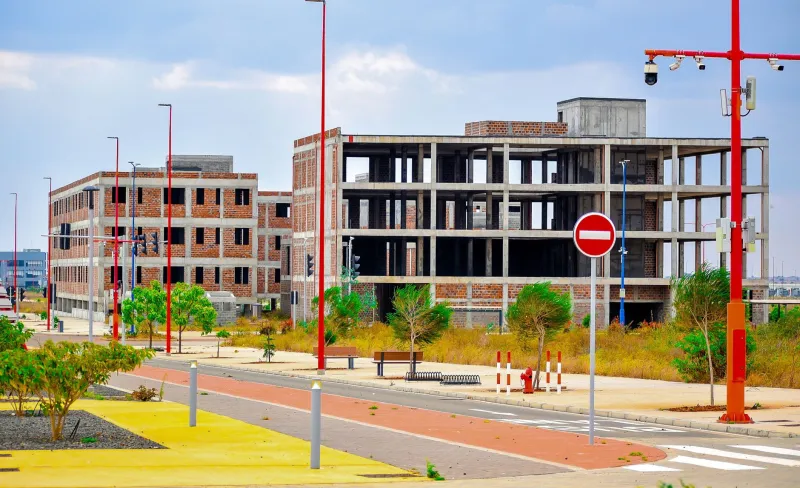
Somewhere on the outer edges of Phoenix, or deep in the scrubland of inland Florida, or along a forgotten stretch of Nevada desert, you might find a road sign pointing toward a neighborhood that never quite happened. The pavement is real. The fire hydrants are real. The model home at the entrance — still wearing its cheerful paint job and faded sales office banner — is very much real. But the neighbors? They never showed up.
These are America's ghost subdivisions, and for urban explorers willing to dig past the obvious abandonment porn of crumbling factories and shuttered hospitals, they offer something genuinely different: a window into the country's complicated, sometimes catastrophic relationship with the dream of homeownership.
How a Neighborhood Dies Before It's Born
To understand what you're walking into when you step onto one of these empty streets, it helps to understand the economic machinery that built — and then abandoned — them.
The 2000s housing boom was a perfect storm of cheap credit, aggressive speculation, and a cultural mythology that treated real estate as a guaranteed path to wealth. Developers pushed outward from established metros into what planners call the "exurban fringe" — land that was cheap precisely because it was far from jobs, schools, and infrastructure. The pitch was simple: buy now, before prices rise. Buyers, lenders, and developers all bet on perpetual appreciation.
Then 2008 happened. Credit dried up overnight. Buyers who had pre-purchased lots couldn't close. Developers who had already graded land, poured concrete, and installed utilities suddenly had no path forward. Construction crews packed up and left. And in their wake, they left behind some of the strangest landscapes in modern American history.
The Sunbelt got hit hardest. California's Inland Empire, the outer suburbs of Las Vegas, the sprawling exurbs of Tampa and Orlando — these regions became ground zero for what journalists started calling "zombie subdivisions." Some had a handful of occupied homes surrounded by empty lots. Others had zero residents at all, just infrastructure humming quietly in the desert heat, waiting for a population that never materialized.
What You Actually Find Out There
For explorers, ghost subdivisions have a different texture than most abandoned sites. There's no dramatic decay here, no peeling paint or collapsed ceilings (at least not right away). The eerie quality comes from the completeness of it all — the fact that everything is in place except the people.
Streetlights on timers still cycle on at dusk, casting orange pools of light over empty driveways. Storm drains built to handle runoff from hundreds of households sit bone dry. Sidewalks stretch for blocks without a single footprint in the dust that's settled on them. In some developments, landscaping crews maintained common areas for years after the developer went bankrupt, contracted by homeowners' associations that existed only on paper.
Model homes are the real prize. Developers typically finished one or two units to show prospective buyers what the finished product would look like. When the project collapsed, those homes were sometimes left fully furnished — staged with rental furniture, decorative throw pillows, and fake fruit in kitchen bowls. Walking through one is like stepping into a time capsule of mid-2000s aspirational taste: granite countertops, open floor plans, three-car garages facing streets that don't connect to anything.
In the Southwest particularly, you'll find developments where the desert is already reclaiming the margins. Creosote and invasive grasses push through cracks in the sidewalk. Coyotes den under unfinished foundations. The contrast between engineered infrastructure and encroaching wilderness is genuinely striking — and for photographers, the light out there is extraordinary.
The Archaeology of Speculation
What makes these sites compelling beyond the visual weirdness is what they tell us about American economic history. Every abandoned subdivision is a physical record of decisions made in boardrooms, lending offices, and kitchen tables across the country.
Look closely at the infrastructure and you can read the development's ambitions. Wide arterial roads suggest a developer expecting heavy traffic — maybe a commercial strip that was never built. Oversized water mains hint at a population density that never materialized. In some Florida developments, you'll find canals dug for planned waterfront lots, now choked with hydrilla and hosting populations of invasive iguanas.
Some sites have layered histories. A subdivision built on land that was previously farmland, or on the footprint of an older failed development from the savings and loan crisis of the 1980s. The ground itself becomes a kind of stratigraphic record of American boom-and-bust cycles.
Local historians and urban geographers have increasingly started treating these sites as legitimate research subjects. The patterns of which neighborhoods got built and which got abandoned often track along racial and economic lines in ways that are worth paying attention to. Ghost subdivisions aren't just curiosities — they're evidence.
Finding Them (And Doing It Right)
Locating ghost subdivisions is easier than you might think. Satellite imagery is your best tool — Google Earth's historical view feature lets you watch these developments appear and then stall in real time. Look for the telltale pattern: curving streets, cul-de-sacs, the geometric regularity of planned neighborhoods, surrounded by undeveloped land with no adjacent development.
County property records are another goldmine. Search for parcels held by LLCs with names like "Sunset Ridge Development Partners" or "Lakewood Communities LLC" that haven't had activity in over a decade. Many of these entities went through bankruptcy proceedings that are part of the public record — and those documents often include site maps, development plans, and financial histories that add enormous context to what you're seeing on the ground.
A few practical notes: ghost subdivisions often exist in legal gray zones. Some are held by banks or receivers who technically control access. Others have been absorbed into county or municipal ownership. Always check the status before you visit, and stick to areas that are genuinely accessible. Many of these sites are also in remote locations with limited cell service — go with a buddy, tell someone where you're headed, and bring water. The desert Southwest does not forgive casual preparation.
Why They Matter to the Explorer Community
Urban exploration has always been about more than trespassing for thrills. At its best, it's a practice of bearing witness — of showing up to places that the rest of the world has turned away from and saying, this happened here, and it deserves to be documented.
Ghost subdivisions deserve that attention. They're not dramatic in the way that a collapsed factory or a flooded subway tunnel is dramatic. Their horror is quieter and in some ways more profound — the horror of a promise made to thousands of American families that simply evaporated. The horror of infrastructure built for community that never found one.
Walk one of those empty streets at golden hour, when the light catches the dust on the model home windows and the streetlights are just starting to warm up, and you'll feel it. This was supposed to be someone's life. Someone's backyard. Someone's commute. Instead, it's yours for an afternoon — a ghost town that skipped the living part entirely.